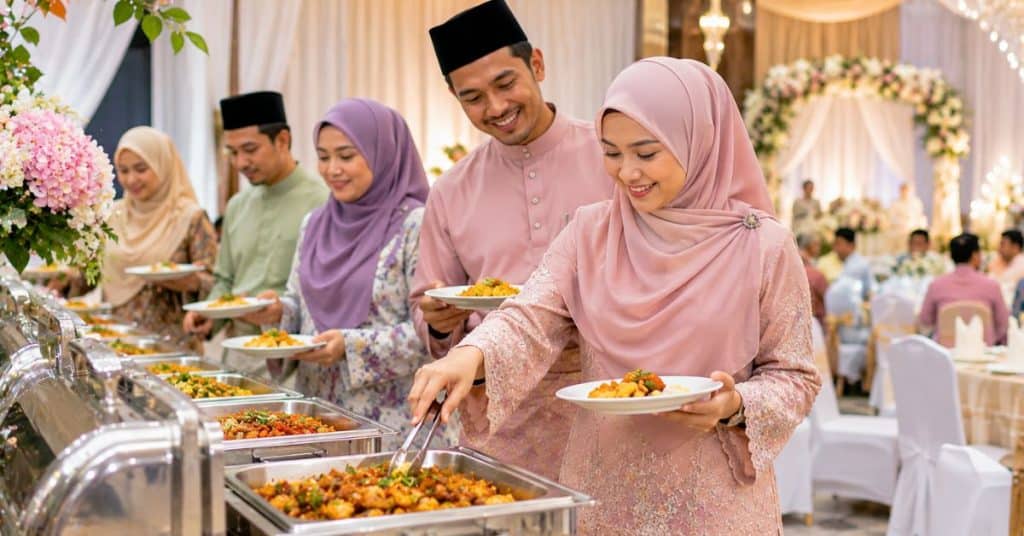
The easiest way to manage a wedding buffet queue is to invite a small group of tables, check how quickly guests move through the food stations, and release the next group when space opens. Guests need three clear details: when their table can go, which buffet entrance to use, and who will guide them.
For a wedding in Singapore, those instructions may need to work across different languages, generations and family expectations. A short announcement, visible table numbers and attentive ushers can make the process feel welcoming rather than overly controlled.
Here is how to organise table invitations so dinner moves comfortably.
Check the Buffet Layout Before Choosing Table Groups
Start with the actual serving arrangement. Two buffet counters do not necessarily mean two independent queues. If guests must visit both counters to complete their meal, everyone still follows the same route.
Ask the venue:
- Does each buffet line offer the same dishes?
- Where do guests collect plates and enter the queue?
- Can guests returning to their seats avoid people approaching the food?
- Where will staff pass when replenishing dishes?
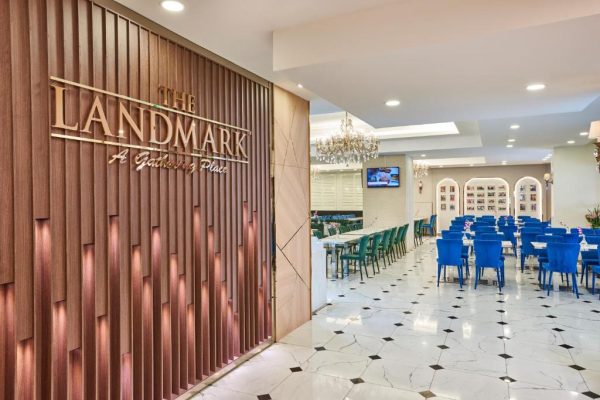
The Landmark’s event space planning guide highlights the importance of separating buffet movement from main circulation routes and allowing room around food stations. Use that principle when marking the queue on your seating plan.
Walk the route with chairs pulled out. A gap that looks generous on an empty floor plan may become awkward once guests are seated.
Build the Invitation Order Around Guest Numbers
Count people, not just tables. Two tables of six create a different queue from two tables of twelve.
As a planning example, you might begin with one or two tables at a single buffet line. This is a trial group, not a fixed rule. The venue team should adjust it according to the number of guests, serving speed and available queue space.
Mark the proposed order on one floor plan. Group tables that can approach the buffet without crossing each other’s paths. Numerical order is convenient, but the clearest walking route should take priority.
If two identical buffet lines are available, assign each a set of tables. Use clear labels such as “Buffet A” and “Buffet B”, and make sure the same names appear on signs and in announcements.
Give One Person Control of the Next Invitation
Confusion starts when the emcee, relatives and venue staff all invite tables independently.
Agree on three responsibilities:
| Role | Responsibility |
| Buffet coordinator | Watches the queue and authorises the next group |
| Emcee | Announces the approved table numbers and route |
| Ushers | Visit those tables and guide guests towards the correct entrance |
The coordinator should be someone who can see the buffet and communicate with the service team. The couple should not need to manage this during their reception.
Use a simple cue between the coordinator and emcee, such as “Tables 5 and 6 ready”. Keep one current invitation list and mark each group as it is called. That prevents duplicate announcements and forgotten tables.
Explain the System Before Anyone Stands Up
Give the first instruction while guests are still seated and listening. Avoid opening with “The buffet is now open”, which can sound like an invitation for everyone to move.
A clearer announcement is:
“We’ll invite a few tables at a time so everyone can reach the buffet comfortably. Please stay seated until your table number is called. Our ushers will show you where to go.”
Then announce only the current group:
“Tables 1 and 2, please follow our usher to Buffet A beside the entrance.”
Avoid listing several future groups. Guests may hear their number and stand up early.
Where needed, repeat the essential instruction in a language familiar to those guests. Ushers can also quietly explain it at individual tables.
Release the Next Tables According to Queue Movement
Do not rely entirely on a fixed interval between announcements. One group may move quickly, while another needs more time to choose dishes or receive assistance.
The coordinator should look for practical signals:
- There is space at the plate collection point.
- The queue remains within its designated area.
- Guests can leave the buffet without squeezing past those waiting.
- Food replenishment is not temporarily holding up service.
Invite the next group when the line can absorb it comfortably. There is no need to wait until every previous guest has returned to their seat.
If movement slows, pause new invitations and identify the cause. A missing serving spoon or an empty tray needs a service response; calling more tables will only extend the queue.
Arrange Assistance Discreetly
Ask during planning whether any guests would prefer help collecting food. An elderly relative may welcome assistance, while another may want to choose their own meal.
Agree with the venue whether a companion or staff member can help, and confirm any available table service in advance. Do not assume it comes with every booking.
Keep companions together when inviting tables. Separating a guest from the person helping them can create more difficulty than a slightly larger group would.
For families with young children, allow parents to decide whether one adult collects food first. Avoid announcements that publicly identify someone’s disability, medical needs or personal circumstances.
Protect the Later Tables’ Dining Time
Staggering works only if the final group still receives a comfortable meal experience.
Ask the venue to estimate the first serving round using your actual guest count, menu and buffet arrangement. Build the programme around that estimate, with room for slower movement.
Schedule speeches that require everyone’s attention after the first serving round, and leave the last tables time to eat. Avoid calling the same guests for family photographs immediately after inviting them to dinner.
Food availability matters too. Confirm how dishes will be replenished throughout the serving period so later tables have a comparable choice.
When reviewing The Landmark’s wedding venue options, include these service questions alongside your discussion of the reception format. Its wedding page covers celebrations across several cultural traditions, making the family’s preferred running order an important planning detail.
Prepare for Late Arrivals and Return Visits
Give ushers a clear approach for guests who miss their invitation. They should check with the coordinator and direct them into the next suitable opening.
For second helpings, politely ask guests to let all tables collect their first meal before returning. Explain this once at the start, then let ushers manage exceptions quietly.
If your reception uses flexible seating and continuous arrivals, a single table order may become unreliable. Instead, have ushers invite occupied tables in small groups and track which guests have eaten. Choose the method that matches how people will actually arrive and sit.
Frequently Asked Questions
How many tables should we invite at once?
Begin with a small group agreed with the venue, perhaps one or two tables per independent buffet line. Adjust according to guest numbers and observed movement.
How long should we leave between table invitations?
Use the queue as your guide. Invite the next group when the entrance has space and guests can move through without blocking nearby routes.
Should the nearest tables always go first?
Not necessarily. Prioritise agreed family arrangements and assistance needs, then choose an order that avoids crossing traffic.
What if guests do not hear their table number?
Have an usher visit each invited table. Clear number signs and quieter background music during announcements also help.