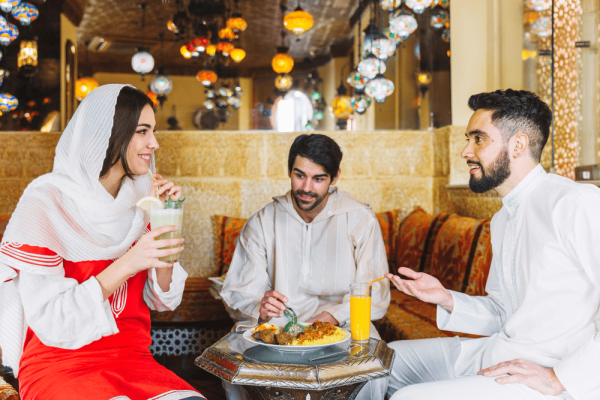
Choosing food for an event is rarely as simple as picking dishes that taste good. A wedding may bring together several generations. A corporate function may include guests with different dietary requirements. A family celebration needs food that feels special without making service complicated. And in Singapore, halal assurance can be an essential part of the decision.
This is where Nasi Padang works particularly well.
Instead of forcing every guest into the same fixed meal, Nasi Padang combines rice with a selection of meats, seafood, vegetables, gravies and sambal. Guests can build a plate around their own appetite and preferences while the host still serves one cohesive menu. That combination of variety, familiar flavours, efficient buffet service and cultural relevance explains why Nasi Padang has become such a practical choice for events in Singapore.
For hosts considering this style of catering, The Landmark’s Nasi Padang and event catering options provide a useful example of how Malay-inspired food can be combined with organised event service.
Nasi Padang Gives Guests Choice Without Creating Multiple Menus
One of the hardest parts of catering for a group is finding a menu that works for everyone.
A plated menu gives the organiser control, but it can be restrictive. Offering several completely separate menus solves that problem but increases complexity. Nasi Padang sits comfortably between the two.
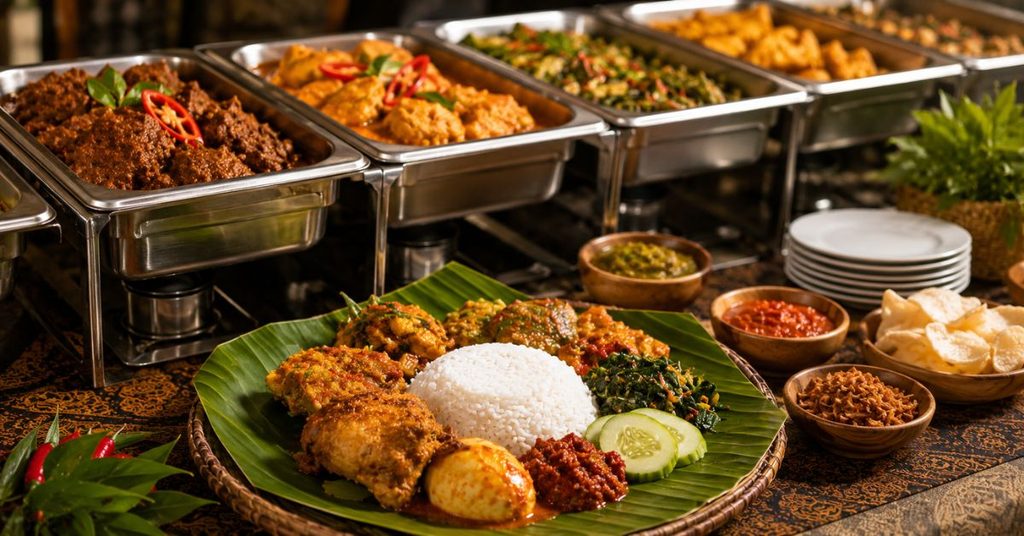
The format naturally revolves around rice accompanied by a selection of dishes. Beef rendang, chicken dishes, vegetables, sambal and richly flavoured gravies can sit alongside one another rather than competing as separate meal concepts. Landmark’s own guide to halal Nasi Padang buffets in Singapore describes the cuisine around rice accompanied by dishes such as beef rendang, sambal and gulai.
That structure gives guests control over their plate. Someone who enjoys intense spice can add sambal and richer dishes, while another guest may concentrate on rice, vegetables and a milder protein.
For an event organiser, that flexibility means fewer situations where a guest feels there is “nothing for me” even though a single buffet is being served.
It Is Naturally Suited to Buffet-Style Event Service
Guests can choose their own portions
Nasi Padang makes sense for buffets because dishes do not need to be combined into one predetermined plate. Guests decide how much rice, meat, vegetables and gravy they want.
That is particularly helpful when an event includes children, older relatives and adults with very different appetites. A person wanting a lighter lunch does not need the same serving as someone attending an evening celebration.
It also helps reduce one of the common frustrations of fixed catering menus: receiving generous portions of something a guest does not particularly enjoy while wanting more of another dish.
The buffet can remain varied without becoming confusing
A successful event buffet does not necessarily need dozens of dishes. It needs dishes that play different roles.
A well-planned Nasi Padang-inspired spread might include:
- One main rice dish as the foundation of the meal
- A rich meat dish such as beef rendang
- A contrasting chicken dish, preferably with a different flavour profile
- A seafood or fish option
- At least one substantial vegetable dish
- Sambal or condiments that guests can add according to taste
- A simple selection of traditional desserts or kueh
The result feels abundant because guests can create different combinations, not because the caterer has simply filled the buffet with repetitive choices.
Nasi Padang Works Especially Well for Larger Groups
Large-event catering introduces problems that do not exist at a ten-person dinner. Service has to move quickly, guests should not spend too long queuing, and the menu must remain practical as dozens of people approach the buffet.
Nasi Padang’s modular structure helps.
Instead of waiting for highly individualised meals, guests move along the buffet and select from prepared dishes. Rice anchors the plate, while proteins, vegetables and sauces can be served in manageable portions.
Landmark’s own content specifically identifies easy service for larger groups as one reason Nasi Padang catering works for Malay celebrations.
Its current Red Velvet Celebration Package also illustrates how this style of menu translates into an event setting. The Malay buffet includes Nasi Minyak together with Vegetable Dalcha, Ayam Masak Merah, Beef Rendang, Sambal Prawn and Ikan 3 Rasa, followed by Malay kueh and Bubur Pulut Hitam.
Although that package is broader than a strictly traditional Nasi Padang spread, the catering principle is similar: one rice base supported by multiple contrasting dishes that guests can combine themselves.
It Feels Appropriate for Celebrations, Not Just Everyday Meals
Good event food has to do more than feed people. It should suit the occasion.
Nasi Padang has an advantage here because the spread can feel generous and celebratory without becoming overly formal. A table containing rice, rendang, chicken, seafood, vegetables, sambal and traditional desserts immediately creates the impression of a shared feast.
That quality makes it particularly suitable for Malay weddings, Hari Raya gatherings, aqiqah celebrations, family reunions and community events. Landmark’s discussion of the cultural role of Nasi Padang in Malay celebrations highlights its association with communal dining and milestone occasions in Singapore.
The cultural connection matters because hosts are often looking for food that feels familiar to family members while still being impressive enough for an important occasion.
Nasi Padang delivers both.
Halal Catering Makes Mixed Guest Lists Easier to Manage
For many events in Singapore, halal catering is not a niche requirement. It is part of making sure invited Muslim guests can dine comfortably.
MUIS is the authority responsible for halal certification services and regulation of Singapore’s halal industry, and it provides a directory through which diners and organisers can check halal-certified establishments.
For event organisers, this simplifies an important part of menu planning. Instead of arranging a general buffet and then creating a separate meal specifically for Muslim guests, choosing an appropriate halal caterer can allow the same main spread to be enjoyed across a more diverse group.
Landmark presents its food and event services as halal and displays MUIS certification information on its website. Its catering guidance also recommends verifying current halal certification when organising an event.
That combination of halal assurance and familiar Southeast Asian flavours makes Nasi Padang especially relevant for weddings, office functions and social gatherings where the guest list may cross different backgrounds.
The Menu Can Be Adjusted for Different Types of Events
Nasi Padang does not need to look exactly the same at every function.
For weddings and major family celebrations
The menu can lean towards richer, more festive choices. Rendang, ayam masak merah, prawns, fish and traditional desserts create a spread that feels generous enough for a significant occasion.
For corporate lunches and seminars
The priorities are slightly different. Guests usually need food that is easy to serve and comfortable to eat before returning to meetings or presentations.
A corporate spread can therefore keep the Nasi Padang concept while controlling the number of very rich or spicy dishes. One flavourful beef or chicken dish, another milder protein, vegetables and rice can provide variety without making lunch unnecessarily heavy.
Landmark’s guide to organising halal catering for office events similarly recommends thinking about menu variety, service format and the needs of mixed groups rather than simply ordering more dishes.
For multicultural guest lists
Nasi Padang can still be an excellent choice, particularly when guests appreciate Singaporean and Southeast Asian flavours. But the host should consider how adventurous the wider audience is.
For highly international corporate functions, combining regional favourites with additional options may make more sense. Landmark’s comparison of Nasi Padang and international buffets for events makes the same practical distinction: Nasi Padang is especially suited to Malay celebrations and family gatherings, while broader international menus may work well for particularly multicultural business groups.
A Strong Nasi Padang Menu Is About Balance, Not Maximum Variety
Hosts sometimes assume a better buffet simply means adding more food. In practice, too many similar dishes can make a menu feel less considered.
The better approach is to create contrast.
If beef rendang provides richness, the chicken dish does not need to use another similarly heavy coconut gravy. If sambal prawns provide heat, another seafood item could offer a sweet-and-sour or lighter flavour. Vegetables should contribute substance rather than appearing merely as decoration.
Before confirming the catering, it is useful to check:
- Whether there is a reasonable balance of meat, seafood and vegetables
- Whether at least one main option suits guests who prefer less spicy food
- Whether sambal can be served separately where appropriate
- How long the buffet service will operate
- What is included in setup, tables, serving equipment and clearing
- Whether dietary restrictions and allergies can be discussed in advance
This approach produces a menu where each dish has a purpose rather than simply increasing the dish count.
Nasi Padang Can Be Part of a Complete Event Setup
Food is only one part of the logistics for a wedding, seminar or company celebration. Once the guest list grows, organisers also need to think about seating, sound systems, projection, reception areas and the physical flow between tables and the buffet.
This is where catering attached to an event venue can reduce the number of separate suppliers that need to be coordinated.
The Landmark’s current Red Velvet Celebration Package, for example, includes venue use, buffet service, dining tables and banquet chairs, a reception table, a prayer corner, sound system with microphones, and projector and screen access. The package currently starts from $55++ per person for a minimum of 50 guests.
For different event sizes, organisers can also review The Landmark’s event venue options in Bugis. Its current venue page lists seating capacities of 100 for Sapphire, 150 for Red Velvet and 250 for The Landmark Ballroom.
The practical advantage is not simply convenience. When the room layout, buffet operation and event schedule are being handled within the same environment, it becomes easier to plan where guests queue, when food is served and how the meal fits around speeches, presentations or other programme items.
Why Nasi Padang Remains a Strong Catering Choice in Singapore
Nasi Padang succeeds at events because it solves several catering problems simultaneously.
It gives guests genuine choice without requiring multiple separate menus. It works naturally in buffet service. It can be scaled for large groups. It feels appropriate for meaningful celebrations. And when prepared through a suitable halal caterer, it can make a diverse guest list significantly easier to accommodate.
More importantly, its appeal does not depend on novelty. The food is familiar enough to feel comforting yet varied enough to make an event meal feel like a feast.
As Singapore events continue to bring together increasingly mixed groups of relatives, colleagues, clients and friends, catering formats that combine cultural character with practical flexibility are likely to remain valuable. Nasi Padang fits that requirement particularly well.
For hosts considering a wedding, corporate gathering or family celebration, the best approach is therefore not simply to ask whether Nasi Padang is popular. Ask whether its combination of rice, complementary dishes, adjustable portions and communal buffet service matches the way your guests actually want to eat. For many events, the answer will be yes.
FAQs
Is Nasi Padang suitable for corporate events?
Yes. Its buffet-friendly format allows employees and guests to choose their own portions and dishes. For business events, include both spicy and milder options so the menu remains accessible to a mixed group.
Is Nasi Padang a good choice for a Malay wedding?
Yes. Its variety, communal serving style and connection with Malay celebrations make it particularly well suited to weddings and larger family occasions.
How many dishes should a Nasi Padang event menu include?
There is no fixed number. A practical spread should focus on balance: rice, two or more contrasting proteins, vegetables, appropriate condiments or sambal, and dessert are more useful than a large number of repetitive dishes.
Can Nasi Padang cater to guests who do not eat very spicy food?
Yes. Choose at least one milder chicken, fish or vegetable dish and consider serving stronger sambal separately so guests can control the heat themselves.