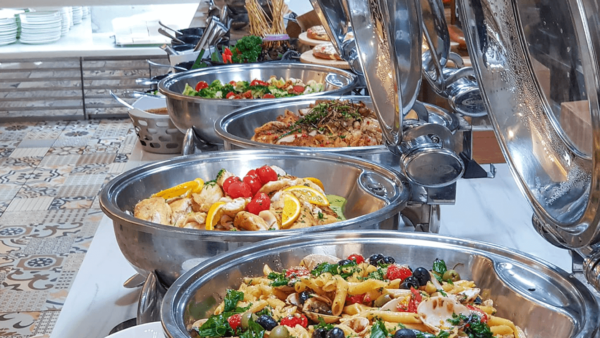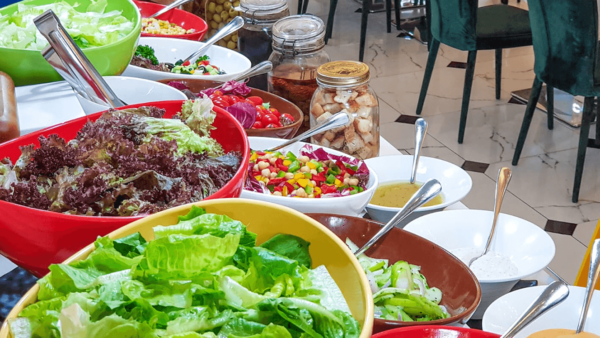
Halal food presentation matters at formal events because it shapes the welcome guests receive, makes the meal easier to navigate and shows how carefully the occasion has been planned. At a wedding reception or corporate appreciation dinner in Singapore, the food display is part of the hospitality guests experience.
Presentation includes the arrangement of each dish, the serving equipment, menu information and attention given to the buffet throughout service. When these details work together, guests can settle into the occasion and enjoy their meal with confidence.
Setting the Tone for a Formal Occasion
A formal setting creates expectations. Guests arriving in evening wear at carefully arranged tables will expect the meal to receive similar attention. Clean platter edges, coordinated crockery and considered portions help carry that sense of occasion through to the food.
Aim for a display that suits the event. A wedding buffet might use soft linens and a restrained floral arrangement beside the food. For a business dinner, simple serving pieces and understated table styling can feel appropriate.
Keep the food visually prominent. Decorations should leave room for guests to see the dishes and for staff to serve comfortably. An elaborate centrepiece loses its purpose if diners must reach around it to fill their plates.
Helping Muslim Guests Dine With Confidence
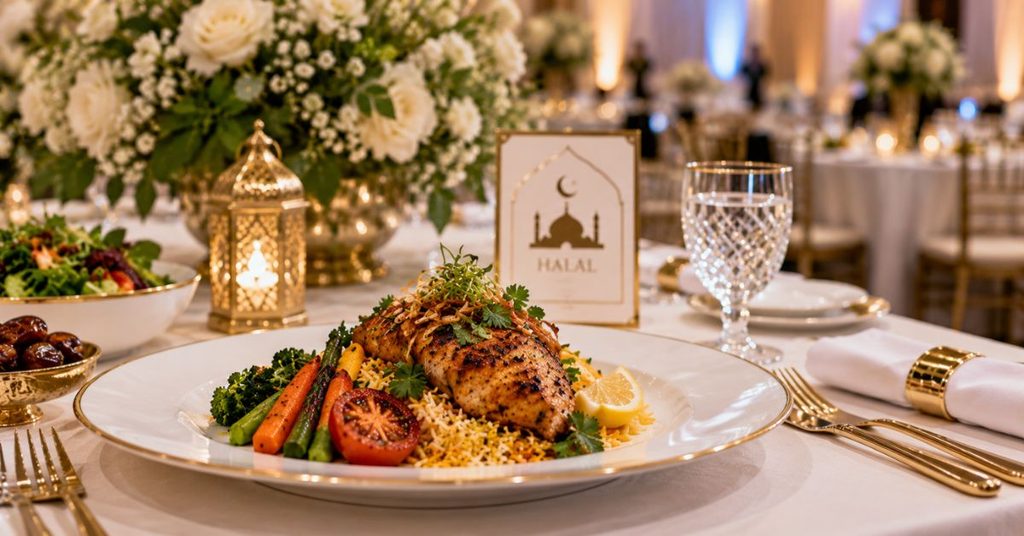
For Muslim guests, feeling welcome includes having clear information about the meal’s halal status. Plan where that information will appear and who will answer questions. This is particularly useful at formal events where guests may feel uncomfortable interrupting proceedings to ask.
Before approving the setup, ask the provider to confirm the relevant current halal certification and its scope. Include sauces, garnishes and any separately supplied desserts in the discussion. Decorative finishing touches deserve the same attention as the main dishes.
Agree on the serving equipment and handling arrangements, especially where several suppliers are involved. A stylish label alone cannot establish halal status.
The presentation should communicate arrangements that have already been verified. Making this information accessible allows the host to offer reassurance discreetly, without asking individual guests to explain their religious requirements at the table.
Presenting Traditional Dishes With Care
Formal presentation can give familiar food a celebratory setting while preserving the way it is meant to be enjoyed. The choice of serving vessel matters as much as the garnish.
For example, The Landmark’s celebration buffet menu lists nasi minyak, ayam masak merah, beef rendang, Malay achar and assorted Malay kueh. These dishes offer opportunities to build an attractive spread around their existing colours and textures.
Give rendang a serving dish that accommodates its rich coating and allows guests to lift a portion easily. Present achar so its cucumber and carrot remain visible. Arrange kueh in manageable rows, with enough space to select a piece.
Retain familiar dish names and add short descriptions where helpful. Guests unfamiliar with the cuisine can understand their choices, while those who know it can recognise the food they came to enjoy.
Making the Meal Comfortable to Navigate
Presentation has a practical job: helping people serve and eat comfortably. This matters when guests are carrying plates in formal clothing, returning to assigned seats or dining between scheduled speeches.
At a buffet, place plates at the entrance and keep accompaniments beside the dishes they belong to. Give sauces suitable ladles and stable containers. A separate drinks station can prevent guests collecting beverages from blocking the main food queue.
Check the layout from a guest’s position. Can someone read the menu card without leaning over a hot dish? Can an older guest reach the serving spoon easily?
For plated service, choose arrangements that remain stable during delivery and are comfortable to cut. Tall stacks and sprawling sauces can make an otherwise elegant meal awkward to eat.
Maintaining Standards Throughout Service
The opening display is only the beginning. Presentation needs attention as guests move through the meal, particularly when tables are invited to the buffet at different times.
Agree who will replace depleted platters, tidy serving areas and refresh utensils. Choose serving vessels that suit both the food and the expected pace of service. Smaller batches can be easier to maintain attractively when staff and replenishment arrangements support them.
Discuss holding equipment before selecting decorative bowls or stands. Ask how hot dishes and chilled items will be maintained appropriately, including during speeches or programme delays. Build any food photography into the service schedule so it does not leave prepared dishes waiting unnecessarily.
For an event using delivered food, confirm who will unpack, arrange and maintain the display. Check whether the order includes equipment and service staff. These responsibilities should be clear before delivery day so the finished setup receives the attention it needs.
What to Agree Before Your Formal Event
Turn presentation preferences into a brief the venue team can use. Review the proposed menu alongside the room layout and programme, then confirm:
- A representative setup: Request photographs or a sample arrangement showing the proposed crockery, serving vessels and menu cards.
- Dish information: Agree on clear names, useful descriptions and a process for answering ingredient or dietary questions.
- Guest access: Check buffet circulation, comfortable reaching distances and assistance for guests who need it.
- Service responsibilities: Confirm setup, replenishment, clearing and the response to programme changes.
- Package details: Establish which styling elements, equipment and staffing are included in the quotation.
The Landmark’s banquet and corporate event options provide a starting point for discussing the venue and buffet together. Ask the team to confirm the arrangements available for your date, guest count and chosen package.
FAQs
Does halal food need a particular presentation style?
No particular colour scheme or plating style establishes halal status. Choose a design suited to the occasion, and confirm the food and service arrangements separately with the provider.
Can a buffet look formal enough for a wedding?
Yes. Coordinated serving pieces, a clear layout and attentive upkeep can create an elegant buffet. Discuss the proposed setup when reviewing your wedding venue options.
Is elaborate garnishing worth the extra cost?
Prioritise suitable crockery, neat portions and reliable service first. Add garnishes when they complement the dish and can be prepared consistently within the event’s budget and timetable.
What should menu cards include?
Use the dish name and a brief description where needed. Ask the kitchen to verify ingredient information and any dietary claims, and identify a staff member who can answer further questions.