Heritage cuisine strengthens a celebration by giving people something personal to share. A familiar dish can bring back an earlier gathering, invite a family story or help someone introduce their culture to a new guest. The connection grows through the conversations and small acts of hospitality that happen around the food.
At a Singapore wedding, milestone birthday or festive reunion, these moments matter. Guests may come from different generations and backgrounds, yet a thoughtfully chosen menu gives them a way to relate to one another. Here is how to make that connection part of your celebration.
Familiar Flavours Bring Shared Memories to the Table
Imagine serving a rendang that reminds relatives of meals at their grandparents’ home. Someone remembers helping in the kitchen; another recalls who always asked for a second helping. One dish opens a conversation that might never have started over a less personal menu.
Those associations are specific to the people attending. A family’s meaningful celebration food might be briyani, a favourite vegetable dish or a particular kueh. Its value comes from the experiences attached to it.
Before choosing the menu, ask close relatives which dishes they associate with happy gatherings. Ask about the details too: the texture, the accompaniments or the way it was served. Choosing food around those answers gives guests something recognisable to respond to. Even when the recipe differs, remembering the earlier version can become part of the pleasure.
Family Recipes Give Younger Guests a Role
A celebration creates an opportunity for younger family members to discover why certain foods keep appearing at important occasions. An older relative can explain who first made a dish for the family, how it was prepared or why it became a favourite.
Keep this exchange informal. Invite a teenager to ask an elder about one dish and write a short menu description together. A younger child might help arrange sweets or learn the names of the dishes before guests arrive.
Participation gives children something they can contribute to the occasion. They can introduce the dish to a cousin or explain why it was chosen. Recording the recipe afterwards, including the cook’s practical tips, also leaves the family with something useful for the next gathering.
Ask the cook to describe the signs they rely on, such as when a spice paste smells ready or a sauce reaches the right consistency. These details are easily lost when a recipe records only ingredients.
Shared Serving Creates Small Moments of Care
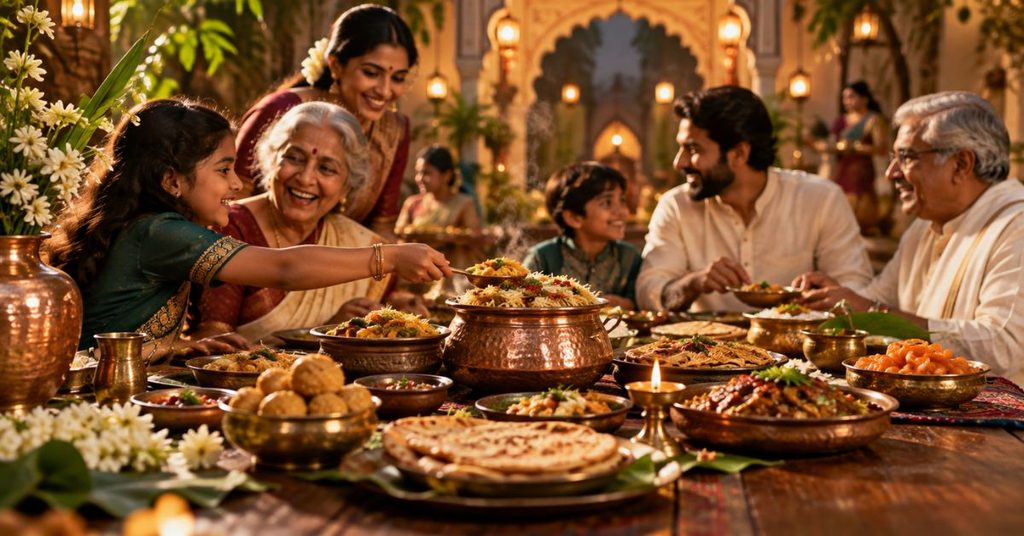
Food brings people into contact when the meal gives them reasons to notice one another. Passing a serving dish, offering an accompaniment or helping an older guest carry a plate creates an opening for conversation.
A spread of rice and complementary dishes works well for this kind of interaction. Guests can suggest combinations and compare favourites while making their own selections. For example, one person might introduce another to the combination of a rich main dish and a tangy achar.
The event arrangement matters here. Keep table settings comfortable, leave enough room for serving dishes and allow an uninterrupted period for eating. At a buffet, make it easy for guests to return to their seats together. When the meal is constantly interrupted by announcements or activities, those quieter exchanges have less room to develop.
Cultural Dishes Help Guests Get to Know One Another
At a multicultural celebration, heritage cuisine offers a personal introduction to the hosts. A guest can learn something about a family through the food they choose to share and the explanation that accompanies it.
In Singapore, dishes such as ketupat, rendang and kuih are familiar features of many Malay households’ Hari Raya gatherings. However, individual families have their own preferences and ways of preparing them. Describing a dish as “our family’s festive favourite” leaves room for those differences.
For a wedding that brings two families together, invite each side to suggest something meaningful. Give unfamiliar dishes clear names and brief descriptions so guests can approach them comfortably. A simple explanation of flavour and how to eat the dish helps someone join the meal without feeling embarrassed about asking.
An Inclusive Menu Makes Hospitality Tangible
The sense of welcome weakens if guests discover that they cannot comfortably eat the food. Heritage should guide the menu alongside the needs of the people attending.
Ask about halal requirements, vegetarian preferences, allergies and spice tolerance before finalising the selection. Choose suitable dishes that feel like a complete meal, with enough variety for guests who need alternatives. Clear ingredient information and serving arrangements help everyone choose with confidence.
Preserving a dish’s character can coexist with practical adjustments. Where appropriate, offer sambal separately or pair a strongly flavoured main with rice and gentler accompaniments. Discuss changes with the kitchen so you understand what is possible.
When a host has considered these details in advance, guests can spend more of the celebration enjoying the company. That attentiveness is itself a meaningful expression of the hospitality the occasion is meant to convey.
Build the Celebration Around a Few Meaningful Dishes
Begin with two or three dishes that represent the family or occasion, then build a balanced meal around them. Consider flavour, texture and how the dishes will be served. A rich main, a vegetable accompaniment and a familiar dessert can each contribute something distinct.
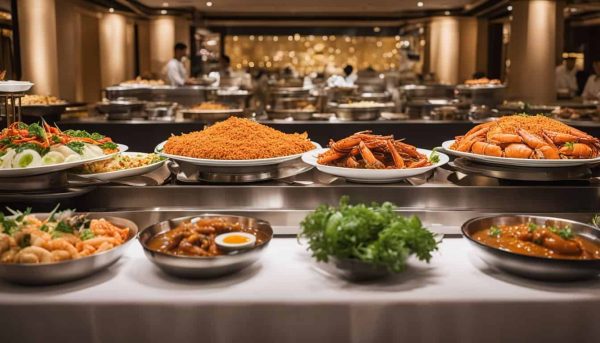
For a concrete example, The Landmark’s published Malay celebration buffet menu lists nasi minyak, ayam masak merah, beef rendang, Malay achar and assorted Malay kueh. These offer a starting point for discussing a celebration menu with familiar festive flavours.
When exploring The Landmark’s banquet and celebration options, consider how the meal fits your guest list and programme. Confirm the menu for your event, explain which dishes matter most and agree on service timing. Clear arrangements help hosts spend time at the table with their guests.
Frequently Asked Questions
Does every dish need to be traditional?
No. A few meaningful dishes can establish the connection. Complete the menu with options that suit your guests and work well alongside those choices.
Can catered food still feel personal?
Yes. Choose dishes with a family connection and share why you selected them. Discuss the preparation style with the kitchen, since versions of the same dish can differ.
Is heritage cuisine suitable for a small birthday celebration?
Yes. A birthday meal built around the guest of honour’s family favourites can feel personal without requiring a large buffet or formal programme.
How can we include guests unfamiliar with the cuisine?
Provide short dish descriptions, explain accompaniments and let guests try small portions. Offer guidance warmly, without expecting everyone to know the food already.
What should we confirm before booking a heritage menu?
Confirm dish availability, dietary requirements, ingredient information, portions and service arrangements. Use The Landmark’s event enquiry page to discuss the details for your celebration.