Choose a ready-to-serve buffet when your banquet needs a predictable meal break and guests must return to their seats for speeches, awards or presentations. Choose live food stations when dining is part of the entertainment and the programme allows guests to eat at different times. A combined format can work well when you want an organised main meal with one interactive food experience.
The deciding factor is how food service fits around everything else happening in the room. Before choosing either format, check your service window, guest numbers, floor plan and kitchen arrangements.
Start With the Time Guests Actually Have to Eat
A one-hour dinner slot does not give everyone an hour to eat. Guests need time to leave their tables, collect food, find their seats and settle before the next announcement.
Work backwards from the next fixed programme item. If an awards presentation starts at 8pm, ask when the last table should receive its first plate. Then allow time for eating, second helpings and clearing.
A ready-to-serve buffet generally suits a tightly scheduled banquet because guests can collect several dishes in one visit. However, its speed still depends on serving points and replenishment.
Live stations fit more comfortably into an extended dining or networking period. Avoid making a slower station the only source of a main course when everyone needs to finish together.
Understand What Each Station Actually Involves
“Food station” does not always mean a chef cooks each order from scratch. A carving station serves food already roasted, an assembly station finishes individual portions, and a DIY station lets guests add their own ingredients.
These differences affect waiting times and staffing.
The Landmark’s Red Velvet Celebration Package lists International, Malay and Indian buffet menus. Its optional stations include satay, roasted lamb carving, roast beef carving and live street chaat. Laksa and soto ayam are identified as DIY stations. Confirm the preparation and serving arrangements for your selected option.
Ask whether guests wait for cooking, portioning or simply collection. That answer tells you more about programme suitability than the station’s name.
Compare Service Capacity Before Choosing the Menu
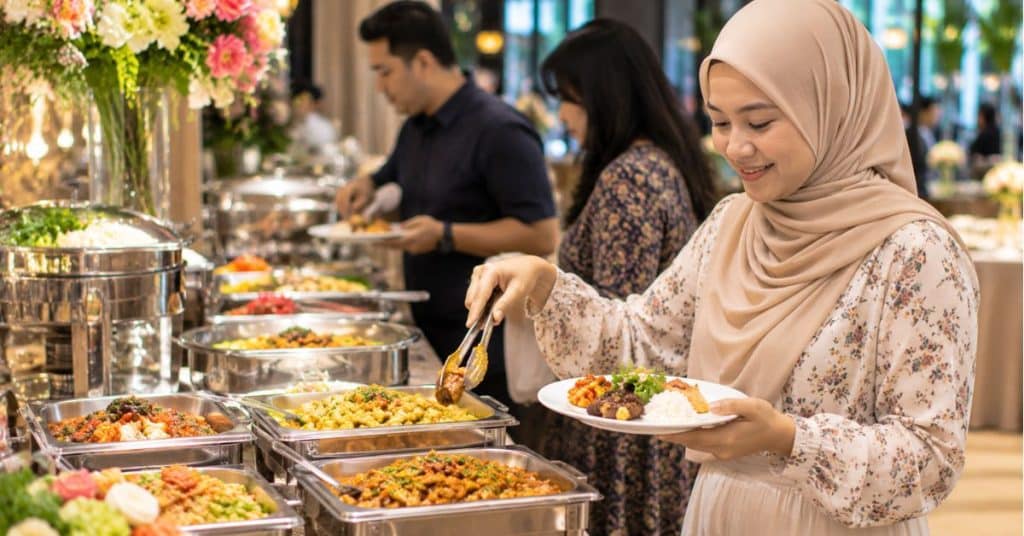
The practical question is how many guests can receive food during your available dining window.
Ask the banquet team:
- How many portions can each station serve per minute?
- How many staff will prepare, plate and hand over food?
- Can popular dishes have more than one collection point?
- What happens when several tables arrive together?
As a planning example, a station serving two portions per minute would need 40 minutes to serve 80 guests once. That assumes steady service without interruptions, repeat visits or special requests. It is an illustration, not a promised service rate.
For a buffet, check whether guests can access both sides and whether identical dishes can be repeated along separate lines. Splitting demand often helps more than adding extra menu choices.
Match the Format to Your Programme
| Programme requirement | Format to consider | Main planning priority |
| Short meal break between presentations | Ready-to-serve buffet | Enough serving points for the whole group |
| Relaxed networking dinner | Live stations or a combined format | Space for conversation away from queues |
| Awards banquet with fixed stage segments | Buffet with an optional station | Complete the main meal before presentations |
| Family celebration with varied eating times | Buffet with selected stations | Easy access and assistance for guests |
These are starting points. A well-staffed station may serve efficiently, while a poorly arranged buffet can cause delays.
Give the banquet team your running order before confirming the format. Include welcome remarks, performances, photographs and any moments when guests must remain seated.
Plan the Queue as Part of the Floor Layout
A station needs more space than its counter. Allow for guests approaching, waiting, collecting food and leaving with plates. Staff also need a route for replenishment that does not cut through the queue.
When reviewing The Landmark’s event venues, request a floor plan showing your actual tables, stage and food service areas. Check the usable space after these elements are included.
Keep queues away from entrances, stage steps and routes to the toilets. Put drinks and cutlery where guests can collect them without stopping the main food line.
For stations involving cooking, ask the venue to confirm suitable power, ventilation and equipment arrangements. The position that looks best in photographs may not be the most practical service location.
Choose Dishes Around the Serving Method
Some dishes suit portioning from a buffet; others benefit from finishing immediately before serving. Discuss that balance with the chef instead of assuming every dish improves when prepared in front of guests.
For a buffet, ask how dishes will be replenished in smaller batches and how their texture will be maintained throughout service. For a live station, keep choices clear enough that guests can order without a lengthy explanation.
Consider how easily people can carry and eat the food. A bowl, side plate and drink can be awkward to manage together.
Provide a clear arrangement for dietary requirements. Confirm ingredients, separate utensils and suitable alternatives directly with the banquet team rather than relying on dish names.
Compare the Full Cost and Service Window
Request quotations against the same guest count, menu scope and operating hours. A station price alone may not explain the complete cost.
Check whether the quote covers chefs, attendants, equipment, setup, portions and additional service time. Establish whether charges are per guest, per item or for a fixed quantity.
Also distinguish venue access from food service hours. The Landmark’s published celebration package specifies buffet service of up to three hours, while certain station options are priced for two hours. Confirm the timings applicable to your booking and whether a delayed programme changes the service end time.
For guests who cannot comfortably queue or carry plates, agree on assistance before the event.
Use a Combined Format With a Clear Purpose
A buffet plus one optional station can provide both a dependable meal and an interactive element. The buffet should offer a complete meal so guests do not have to visit the station.
Give the additional station a specific role: a welcome-period snack, a feature during networking or an extra choice alongside dinner. Avoid duplicating substantial dishes unless that quantity is intentional.
When discussing your banquet arrangements with The Landmark, share the running order and ask which combination the team can deliver within it.
Frequently Asked Questions
1. Are live food stations always slower than a buffet?
No. Speed depends on preparation, staffing and demand. A carving station may move quickly, while individual cooking or several customisation choices can take longer.
2. Can live stations operate during speeches?
They can, but movement and preparation noise may distract guests. Agree on quieter service periods and position stations away from the presentation area.
3. Is a buffet usually cheaper?
Compare complete quotations. Station staffing and equipment can add costs, but menu ingredients, portions and service duration also affect the final price.
4. How many live stations should a banquet have?
Base the number on expected demand, serving speed and available space. Ask for a service plan showing how the chosen stations will handle peak demand.
5. What if guests arrive late?
Agree on a late-arrival meal arrangement and service cut-off beforehand. Do not assume stations will remain open beyond their contracted hours.