The easiest way to try more dishes at an international buffet is to make your first serving of each dish smaller. Look around before choosing, take enough to appreciate the flavour, and return for favourites only while you still have an appetite. This gives you room to explore without leaving a collection of unfinished plates.
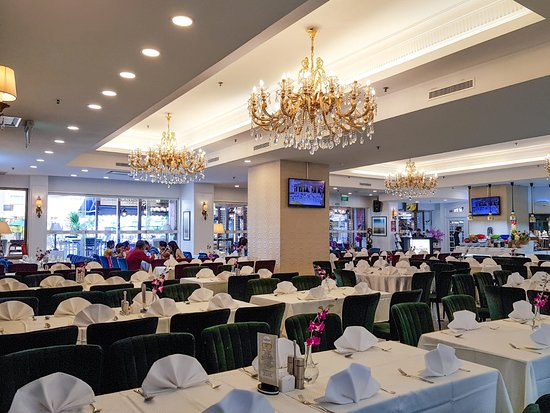
At The Landmark’s international halal buffet in Singapore, the selection spans Asian, Indian, Mediterranean and Western cuisines. With that much choice, a little planning helps you enjoy the variety without treating every dish as something you must finish in one visit.
Check the Menu Before You Start Filling Your Plate
Browse the buffet menus before your visit, then walk around the actual spread before taking food. The Landmark publishes separate menus for Monday–Tuesday, Wednesday–Thursday and Friday–Sunday, so check the menu relevant to your booking.
Choose a few priorities: something unfamiliar, a favourite you particularly enjoy, and a dessert that catches your attention. Leave the remaining choices open until you see what is available.
Include live stations and desserts in your initial look. Discovering them after a large plate of mains often creates the temptation to take more than you comfortably want. If one particular dish matters to your visit, confirm its availability beforehand.
Make Your First Plate a Tasting Plate
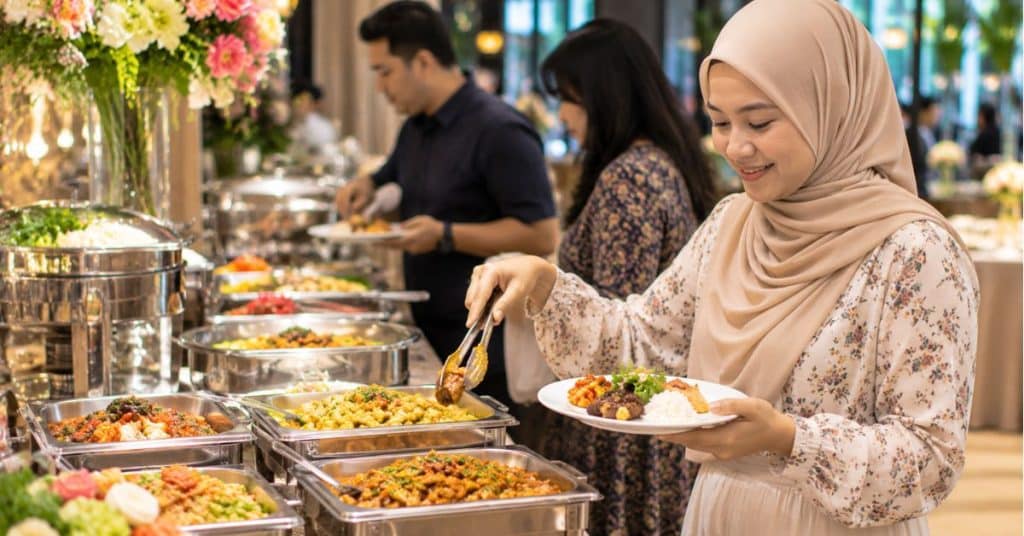
Start with three or four dishes in modest amounts. A small spoonful of a mixed dish, one manageable piece of meat or one bite-sized savoury item can help you decide whether you want more. Small samples are a practical way to explore a buffet without committing to full portions.
Adjust the amount to the food:
- Curries and stews: Take a small piece with enough sauce to understand the dish.
- Rice and noodles: Begin with a spoonful rather than a mound.
- Fried snacks: Choose one small item before collecting several varieties.
- Salads: Try a little of the prepared combination before adding extra dressing.
A large serving spoon does not mean you need to take a full scoop. Serve gently, and ask staff for help if an item is difficult to portion neatly.
Choose Different Flavours, Not Several Similar Plates
Variety becomes more satisfying when each choice brings something different. Instead of starting with several rich meat dishes, combine contrasting cooking styles, textures and flavours.
For example, The Landmark’s Monday–Tuesday menu lists tabbouleh, peri peri grilled chicken, beef rendang and fish tikka. You could choose a small salad serving, one grilled item and a little rendang to experience distinct flavours without building several complete meals.
Keep strongly flavoured sauces away from delicate dishes. A spoonful of curry spread across everything on your plate makes it harder to appreciate each item.
Leave space between foods and add condiments sparingly. You can add more sauce after tasting; removing an overpowering dressing is much harder.
Treat Rice, Bread and Noodles as Deliberate Choices
Rice, bread and noodles can be some of the most enjoyable dishes at a buffet. The problem comes when you add large servings automatically alongside every main.
Decide which accompaniment you actually want. If you are tasting a curry, a little rice or bread may be enough. If the rice dish itself interests you, give it attention without adding several other starches simply because they are nearby.
Avoid assembling a full rice plate, a full noodle plate and a bread basket before sitting down. Choose one pairing at a time so you can judge what you still want afterwards.
Ask About Live-Station Portions Before Ordering
At a staffed station, explain that you would like to sample the dish and ask whether a smaller portion is possible. Make the request before cooking or plating begins.
A simple “Could I have a small tasting portion, please?” gives the server a clear idea of what you need. Some items have fixed portions, so accept that a smaller serving may not always be practical.
Also check how long preparation will take. Avoid ordering a dish, collecting another full plate while waiting, and then discovering that both are ready together. Collect freshly prepared food when you are ready to eat it.
Coordinate With Your Table Before Collecting Food
Group meals can create waste when several people bring back the same food “for everyone”. Before collecting anything for the table, ask who wants it and how much.
If sharing is permitted, agree on one modest serving and divide it using clean serving cutlery. Do not assume companions will finish whatever you cannot manage.
For children, offer a little familiar food alongside one new item they want to try. Avoid preparing an adult-sized plate or collecting several alternatives before they have tasted the first choice.
Anyone who needs help carrying food should still choose their own dishes and quantities where possible.
Keep Buffet Food and Serving Utensils Separate
Use the utensil provided for each dish and leave it at that station. Moving tongs between trays can transfer food residues, while using your own eating cutlery introduces another avoidable hygiene problem.
Take a clean plate for your next serving, and never return food from your plate to a communal tray.
Ask about unfamiliar ingredients before serving yourself. Understanding whether a dish is very spicy, contains bones or includes an ingredient you avoid can prevent an unwanted portion. If you have a food allergy, discuss it with staff rather than testing a small bite.
Make Your Last Round a Decision, Not a Habit
Before getting up again, ask yourself what you still want to taste and whether you have room to enjoy it. There is no need to collect another plate simply because someone else is returning to the buffet.
Choose dessert with the same care as your mains. Start with the item that interests you most, then decide whether you want another. Collect ice cream only when you are ready to eat it.
Closing time is also not a reason to stockpile food. Ask about service timings early, especially if you plan to visit a staffed station later in the meal.
Frequently Asked Questions
How many dishes should I try on my first plate?
Three or four small samples are a useful starting point. The right amount depends on portion size and appetite; avoid turning each sample into a full serving.
Should I eat expensive dishes first to get better value?
Choose dishes you genuinely enjoy. Taking food mainly because it seems expensive can leave less room for the flavours you came to experience.
What if I do not enjoy something I have taken?
Do not force yourself to finish it. Leave it on your plate, never return it to the buffet, and use a smaller sample for your next unfamiliar choice.
Can I take unfinished buffet food home?
Do not assume takeaway is included. Ask staff about the restaurant’s policy, and avoid taking extra food with the intention of packing it later.
How can I check what will be served at The Landmark?
Review the published menu and contact The Landmark to confirm dishes, station availability or dietary questions for your chosen session.