
A successful networking dinner gives guests two things: a comfortable place to eat and a natural way to meet people beyond their table. Too many dining tables can leave conversations confined to small groups. Too little seating makes a proper meal awkward.
The balance starts with the floor plan and programme. Before confirming a venue in Singapore, decide when guests will mingle, when everyone will sit down, and how they will move between those activities. Then ask the venue to show how your actual guest count fits that arrangement.
Choose Capacity for the Whole Evening
A room’s seated capacity and standing capacity describe different layouts. They are not interchangeable, and they should never be added together.
The Landmark’s event venues list the following capacities:
| Event space | Seating capacity | Standing cocktail capacity |
| Red Velvet | 150 | 180 |
| Sapphire | 100 | 120 |
| The Landmark Ballroom | 250 | 280 |
These published figures provide a starting point for shortlisting a room. They do not establish how many guests can dine while a separate mingling area remains available.
Ask for a proposed layout showing dining tables, occupied chairs, food service, drinks, entrances and the space reserved for conversation. A room that accommodates your full guest list for seated dining may need fewer tables to support both activities comfortably.
For example, an 80-person dinner needs more than confirmation that 80 chairs fit. The plan must also show where guests can gather without blocking service or standing behind seated diners.
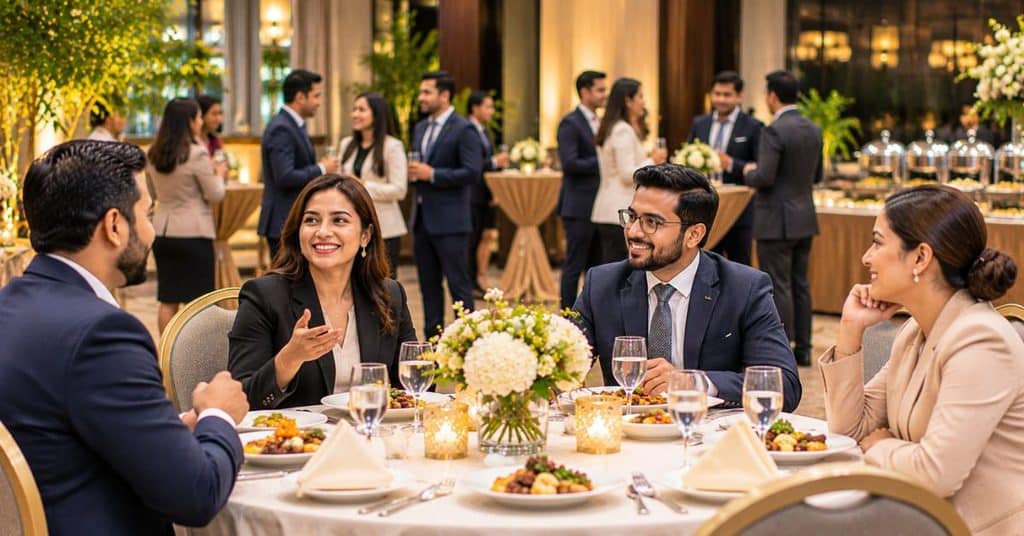
Give Mingling Its Own Space
An aisle between dining tables is a route through the room. It is not a reliable place for a group to stop and talk.
Create three clear areas:
- Arrival: A place to check in and collect name badges.
- Dining: Tables where everyone can eat comfortably.
- Conversation: An open area where small groups can gather.
Position registration so that arriving guests do not queue across the entrance. Keep the conversation area visible from the dining tables, making it easy to recognise when the evening moves into its next phase.
A few standing tables can give guests somewhere to put drinks, if the venue can supply them. Include ordinary seating nearby so participation does not depend on standing.
Avoid placing every activity in one corner. Registration, refreshments and networking clustered together can create congestion while the rest of the room remains unused.
Select Tables That Support Conversation
Table shape influences who can speak comfortably with whom.
Round tables allow guests to see one another, although large rounds can make conversation across the centre difficult. Long tables use space differently but often limit discussion to immediate neighbours.
Ask to see the actual tables available and their proposed place settings. Check whether centrepieces, signs or shared dishes would interrupt sightlines.
For a networking dinner, assigned tables with flexible seating can offer a useful middle ground. You control the mix of guests without prescribing every conversation.
Seat people with a relevant connection: complementary roles, shared interests or similar business challenges. Avoid grouping every colleague from the same organisation together.
A table host can introduce guests and bring quieter people into the discussion. Give hosts a short briefing and one useful opening question, rather than a script that makes dinner feel like a workshop.
Match Food Service to the Networking Plan
Food service changes how guests move.
A buffet creates opportunities to leave the table, but its queue can consume the space intended for conversation. Ask where the queue will form, how guests return to their seats, and whether tables should be invited up in stages.
Plated service keeps guests seated for longer and requires clear routes for staff. If it is available for your event, allow uninterrupted time for serving and clearing.
The Landmark’s event space rental page describes buffet options for corporate events. Confirm the menu and service arrangement for your specific dinner.
Collect dietary requirements before finalising catering. Agree how the team will identify and serve requested meals so guests do not have to leave conversations repeatedly to find assistance.
Keep refreshments accessible during networking, but place drink collection away from the main doorway. Guests should be able to stop for a drink without stopping everyone behind them.
Build Clear Transitions Into the Programme
Guests need enough time to settle into conversations, followed by a clear invitation to move on. An evening with no transitions can leave people at their original tables until departure.
An illustrative programme could be:
| Time | Activity |
| 6.30–7.00 pm | Arrival and informal introductions |
| 7.00–7.10 pm | Welcome and seating |
| 7.10–8.10 pm | Dinner and table conversation |
| 8.10–8.20 pm | Brief closing remarks |
| 8.20–9.00 pm | Open networking |
Adjust these timings to the menu, attendance and agreed booking period.
Keep speeches within their allocated slot. If dinner runs late, shorten announcements before removing the main networking period.
Avoid asking guests to change seats while eating. A transition after the main meal is easier to manage, especially when people have bags, drinks or dietary arrangements tied to their places.
Give a specific invitation: “Please join us in the conversation area for coffee and introductions.” This helps guests understand that leaving their table is part of the programme.
Check Comfort From a Guest’s Position
Inspect the room as someone trying to have a conversation.
Ask for background music to be demonstrated at the proposed volume. Check whether guests at a dining table can hear one another without leaning forward or raising their voices. Keep speakers away from the main mingling area where possible.
Lighting should make faces and name badges easy to see. Avoid oversized decorations that divide a table visually.
Walk the route between the entrance, dining area, refreshments and toilets. Review access needs with the venue, including space around occupied chairs and suitable seating within the conversation area.
Finally, confirm whether any furniture must move during the event. Agree who handles it, when it happens and where guests will be while the change takes place.
Frequently Asked Questions
1. Does every guest need a dining seat?
Yes, if you are serving a seated dinner. Standing tables can supplement the networking area, but they should not replace dining places for guests expected to eat a full meal.
2. How much space should we reserve for mingling?
There is no single percentage that suits every room. Ask for a layout based on your attendance, furniture and service arrangement, with conversation space clearly marked.
3. Should networking happen before or after dinner?
Both can work well. Arrival networking helps guests meet; the period after dinner lets them continue useful conversations and approach people seated elsewhere.
4. Is a buffet always better for networking?
No. It encourages movement, but queues can interrupt conversations. Choose the service format that fits your room and programme, then protect dedicated time for introductions.

