Holding your wedding tea ceremony and reception in the same venue can save journeys across Singapore and make the day easier for relatives. However, sharing an address does not automatically create a smooth programme. You still need to plan family arrivals, ceremony seating, tea preparation and the changeover to dining.
The best starting point is to agree on your family’s requirements, then check how the venue can accommodate them. Build the reception around a realistic ceremony schedule, with clear responsibilities for everything that happens between the two.
Agree on the Family Arrangements Before Booking
Speak with both families before deciding when and where the tea ceremony will happen. Confirm whether everyone is comfortable holding it at the reception venue and whether any customs will still take place at home.
Prepare one agreed list covering:
- Who will receive tea and in what order.
- Whether the two families will have separate sessions.
- The names and forms of address the ceremony host should use.
- Whether the couple will kneel, stand or use another agreed arrangement.
- Any preferred timing that affects venue access.
Avoid relying on a generic serving order without checking it with your families. A written list also helps identify relatives who appear in several parts of the programme, so nobody is expected at registration and the ceremony simultaneously.
Choose Between Separate Spaces and a Shared Room
There are two practical arrangements: hold the ceremony in a separate space, or use part of the reception room.
A separate room can provide privacy while the dining area is being prepared. However, check its availability, additional cost and walking route to the reception. Ask whether relatives can remain there afterwards or must leave immediately for another booking.
Using the reception room can reduce movement, but the ceremony area must work alongside dining tables, service routes and arriving guests. If furniture needs moving, agree where guests will wait during the changeover.
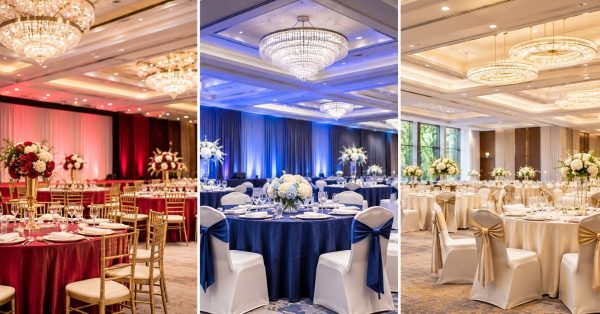
The Landmark’s event venues page lists Red Velvet, Sapphire and The Landmark Ballroom, with published seating capacities of 150, 100 and 250 respectively. These figures are starting points: ask for the capacity of your proposed wedding layout with the ceremony area included.
Do not assume that booking one room includes access to another.
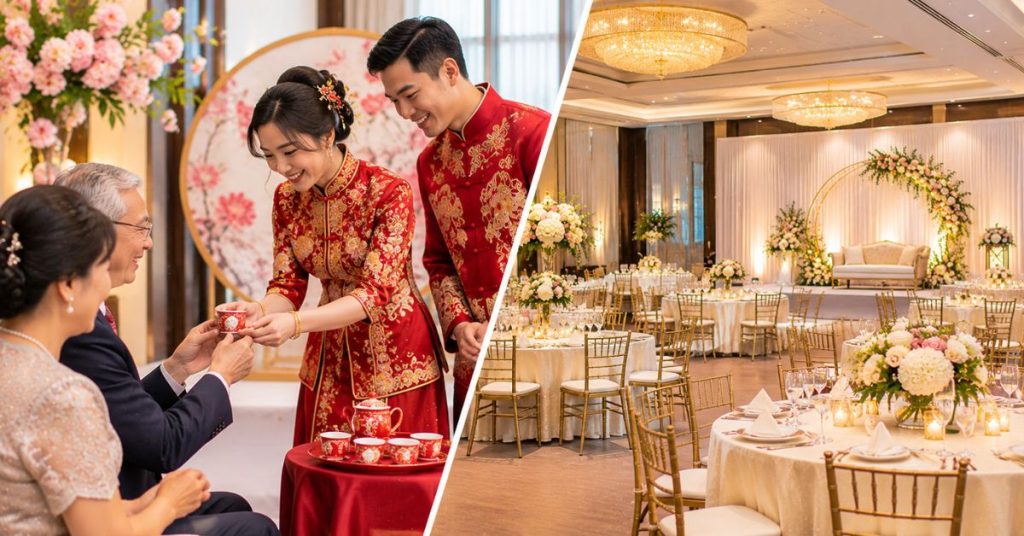
Calculate Ceremony Time From the Serving List
A ceremony involving six family groups needs a different schedule from one involving twenty. Count the actual serving turns, including separate turns for individuals where required.
For an initial planning estimate, allow two to three minutes per serving turn, then adjust after discussing the sequence with your ceremony host and photographer. This is a working allowance, not a fixed rule. Jewellery presentations, blessings and helping relatives into position can extend individual turns.
For example, twelve turns at roughly three minutes each already take 36 minutes. Seating everyone, introducing the ceremony and taking family photographs require additional time.
Set a firm ceremony finish time by working backwards from the meal. Include changing clothes, touching up hair and makeup, and moving guests to their tables. These tasks should have their own slots rather than borrowing time from dinner.
Build a Programme With a Real Changeover Window
The following example suits a relatively small family ceremony before an evening reception. Adjust it to your serving list and the venue’s confirmed access hours.
| Time | Activity |
| 4.15 pm | Helpers arrive and check the ceremony setup |
| 4.45 pm | Participating relatives arrive and take their seats |
| 5.00–5.40 pm | Tea ceremony |
| 5.40–6.00 pm | Planned family photographs |
| 6.00–6.30 pm | Couple changes; ceremony items are cleared |
| 6.30 pm | Reception registration opens |
| 7.00 pm | Guests take their seats |
| 7.15 pm | Reception begins, followed by agreed meal service |
This example assumes the venue permits early access and has enough staff and space for the changeover.
Give relatives their ceremony arrival time separately from the general reception invitation. Otherwise, some may arrive at dinner time without realising they were needed earlier.
Check the Ceremony Setup From an Elder’s Perspective
Walk through the route from the arrival point to the ceremony chairs. Check lift access, changes in floor level, nearby toilets and space for anyone using a wheelchair or walking aid.
Provide stable chairs and somewhere for waiting relatives to sit. Keep the route to the ceremony position clear of bags, decorations and photography equipment.
If the ceremony is on a stage, check how each participant will reach it. A floor-level arrangement may be more practical when steps would make participation difficult.
Position the tea preparation table within easy reach of the helper, but outside the main photograph. Leave enough room for the couple’s clothing, the photographer and someone assisting with gifts.
Assign Tea Preparation and Gift Handling
Do not assume that reception beverages include the equipment or staffing needed for the tea ceremony.
Confirm who supplies the tea set, cups, tray, tea ingredients, hot water and any kneeling cushions. Ask where tea can be prepared, how cups will be replenished and where used cups will go.
Assign clear jobs:
- Family coordinator: Calls relatives in the agreed order.
- Tea helper: Prepares and passes cups, checking that the tea is comfortable to sip.
- Gift custodian: Receives and secures red packets and jewellery after presentations.
- Venue contact: Coordinates clearing, furniture changes and reception readiness.
For a small ceremony, one person may handle more than one task, provided the duties do not overlap. Keep gifts away from the clearing area so they cannot be packed with crockery or decorations.
Coordinate Photography, Guest Arrivals and Food Service
Give the photographer a short list of essential family portraits. Decide which photographs happen immediately after each serving turn and which need a separate group session. Repeatedly assembling the same relatives can quickly consume the changeover window.
Meanwhile, reception guests need clear directions. If they arrive while the ceremony is still running, someone should welcome them and explain where to wait without interrupting proceedings.
Confirm the meal starts with the venue team and nominate one person who can approve programme changes. If the ceremony runs late, shorten optional photographs or speeches before changing food service arrangements.
For a buffet reception, include assistance for relatives who may find it difficult to queue or carry plates.
Put the Full Arrangement in the Booking Details
The Landmark’s wedding venue page describes hosting multicultural weddings and traditional ceremonies. Discuss your specific tea ceremony requirements directly rather than treating them as automatic package inclusions.
Request written confirmation of early access, allocated rooms, furniture, tea equipment, staffing, changing facilities, clearing responsibilities and any additional charges. Include the approved floor plan and programme.
A useful question is: “What must happen between our final tea presentation and the first reception guests entering?” The answer should identify the tasks, the people responsible and the time required.
Frequently Asked Questions
Can both families have their tea ceremony at the reception venue?
Yes, if both families agree and the venue can accommodate the arrangement. Decide whether to hold separate sessions or one continuous ceremony.
How long should we allow for the tea ceremony?
Calculate it from your serving list. Use two to three minutes per turn as an initial estimate, then add seating, photographs and a buffer.
Do we need a separate room?
Not necessarily. A designated reception-room area can work if privacy, guest movement and furniture changes are properly planned.
Is tea ceremony equipment normally included?
Do not assume so. Ask for an itemised list covering cups, trays, tea preparation, hot water, chairs and any cushions required.