
Event planning becomes stressful when too many important decisions remain unresolved at the same time. A changing guest count affects the room layout. The room layout affects catering. Catering affects the schedule. The schedule affects vendors, speakers, entertainment and staffing. One small change can quickly create five more decisions.
The solution is not to plan every detail months in advance. It is to remove uncertainty in the right order.
A stress-free event planning experience comes from establishing clear priorities, choosing a venue that reduces logistical work, setting decision deadlines and giving every important task a clear owner. Whether you are organising a corporate seminar, wedding, birthday celebration or private gathering in Singapore, the following approach will help you stay in control without spending every week chasing suppliers and fixing avoidable problems.
Start With a One-Page Event Brief
Before comparing décor ideas, menus or entertainment, define what the event actually needs to accomplish.
Separate the essentials from the preferences
Write down the purpose of the event, expected guest count, preferred date, approximate budget, programme format and any non-negotiable requirements.
For example, a corporate seminar might require reliable audiovisual equipment, theatre-style seating, convenient MRT access and refreshments between sessions. A family celebration may place greater importance on privacy, comfortable dining, menu variety and accessibility for elderly relatives.
This short brief becomes your decision filter. When somebody proposes an additional idea, you can ask whether it improves the event’s main purpose or simply creates more work.
It also makes conversations with venues far more productive because you can provide clear requirements instead of asking them to suggest everything from scratch.
Choose a Venue That Reduces Your Workload
The most beautiful venue is not necessarily the easiest venue to organise. A better question is: How many planning problems does this venue solve for me?
Singapore’s official business-events venue directory encourages planners to compare practical features such as capacity, seating configuration, built-in AV, catering, parking, Wi-Fi and wheelchair accessibility rather than looking at the room alone.
Match capacity to the actual room layout
Do not select a venue using its maximum capacity alone. A room that holds 200 people in one configuration may support considerably fewer once you introduce banquet tables, a stage, presentation screens or circulation areas.
The Landmark, for example, publishes capacities according to different event configurations across its event venue options. Red Velvet, Sapphire and The Landmark Ballroom support different guest numbers depending on whether the event uses seated, theatre or standing arrangements.
Knowing the intended layout early prevents last-minute decisions about squeezing in extra tables or repositioning important event elements.
Think about the guest journey before booking
Imagine arriving as a guest rather than an organiser.
How easy is the venue to reach? Is parking available? Will guests know where to enter? Can elderly guests move comfortably through the venue? Is there enough space around registration, dining and presentation areas?
Accessibility deserves particular attention. Singapore’s BCA Code on Accessibility establishes baseline requirements intended to make buildings more usable for persons with disabilities, older people and families with young children.
Location can remove another layer of stress. The Landmark is located at Village Hotel Bugis, with access from Bugis MRT as well as bus, taxi and parking options described on its contact and directions page.
A convenient venue reduces late arrivals, repeated direction requests and transport questions before the event has even started.
Build Your Timeline Backwards From Event Day
Traditional to-do lists often become stressful because every task appears equally urgent. Instead, build a reverse timeline with decision deadlines.
A practical version might look like this:
- 6–8 weeks before: confirm the venue, budget range, event format and major suppliers.
- 3–4 weeks before: finalise the programme structure, menu direction, entertainment, décor and technical requirements.
- 1–2 weeks before: update the guest count, seating requirements, dietary needs and detailed programme.
- 3–5 days before: confirm vendor arrival times, room setup, signage, equipment and final responsibilities.
- 24–48 hours before: distribute the final run sheet and resolve only genuine operational issues.
- Event day: follow the agreed plan rather than reopening settled creative decisions.
The exact timing will vary according to event size, but the principle remains the same: every important choice needs a deadline.
This stops questions such as menu selection, seating style or stage position from remaining open until the final few days.
Make Guest Management Simple
Guests should not need to contact the organiser repeatedly for information that could have been included in one clear message.
Your invitation or confirmation should tell them where the event is, when to arrive, how to reach the venue, whether they need to RSVP and anything else they genuinely need to prepare.
Collect special requirements before the final headcount
Do not wait until event week to discover dietary or accessibility requirements.
Your RSVP process should collect relevant information early enough for the venue to act on it. For events with culturally diverse groups, food suitability can be particularly important.
A venue with broad dining options can make this easier. The Landmark’s international halal buffet menu includes a mix of international, local, Western, seafood and Indian selections, giving organisers more variety when serving groups with different preferences.
For larger dining events, it is also worth deciding how guests will move through the meal rather than thinking only about what they will eat. Landmark’s guide to planning a group dining experience explores this issue in more detail.
Design Catering Around the Event Flow
Food should work with the programme rather than interrupt it.
Imagine a corporate event where a presentation ends at 12:30 pm and 150 people immediately enter one buffet queue. Even an excellent menu may produce a poor guest experience if the service flow has not been considered.
Ask the venue how many buffet lines or service points will operate, how long service normally takes and whether food service can be staggered around the programme.
For networking events, a relaxed service format may encourage conversation. For formal celebrations, a structured meal may suit the occasion better. For seminars, coffee breaks and meals should fit naturally between sessions instead of forcing speakers to rush.
The objective is not to find the most elaborate food arrangement. It is to choose the format that creates the least friction for guests.
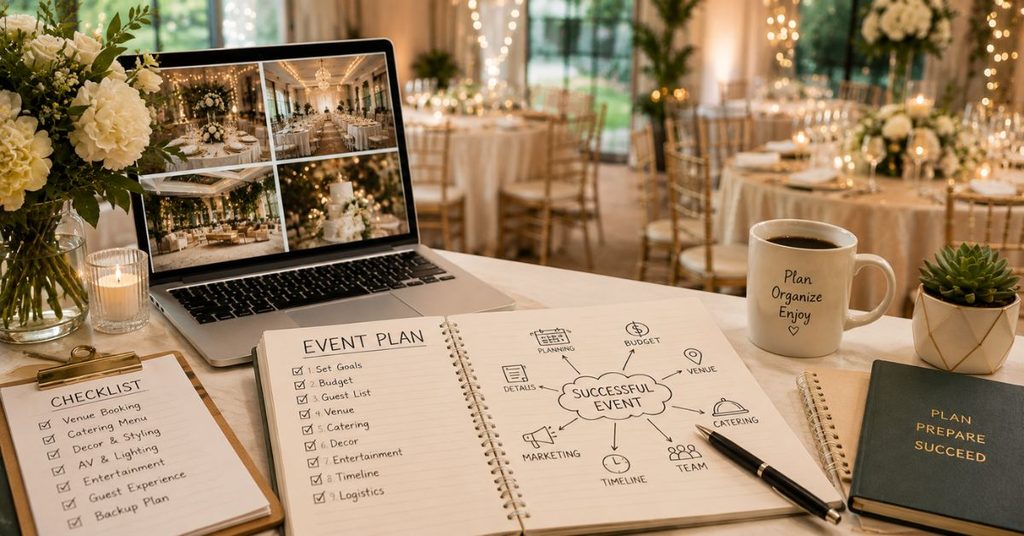
Reduce the Number of People You Need to Coordinate
Every additional supplier introduces another quotation, invoice, arrival time, contact person and possible failure point.
Whenever practical, choose a venue that can combine several important event requirements under one team.
For example, Landmark’s corporate event and venue packages describe event spaces together with options such as audiovisual systems, flipcharts, markers, notepads and catering for seminars and corporate functions.
That type of consolidation can be more valuable than saving a small amount by sourcing every item separately.
Give every decision one owner
When several people are organising the event, avoid shared responsibility for important tasks.
If three people are responsible for confirming the photographer, nobody may actually confirm the photographer.
One person should own each key area, while one overall event lead should be authorised to make final decisions. Suppliers should also know exactly who to contact instead of receiving conflicting instructions from several members of the organising team.
Fewer communication paths mean fewer misunderstandings.
Rehearse the Parts Most Likely to Fail
You rarely need to rehearse an entire event from beginning to end. Concentrate instead on the moments where a small failure could become highly visible.
Test presentations on the equipment that will actually be used. Check microphones. Confirm who introduces each speaker. Walk through an award presentation or important entrance. Make sure videos have backup copies. Verify how lighting changes will happen.
If your event depends heavily on technical equipment, reviewing the venue’s facilities beforehand is essential. Landmark’s guide to essential conference venue facilities explains why AV, Wi-Fi, room flexibility and supporting infrastructure should be considered during venue selection rather than discovered on event day.
A ten-minute technical check can prevent a very long ten minutes in front of an audience.
Create a Small Contingency Plan
Trying to imagine every possible disaster creates more anxiety, not less.
Focus instead on problems that are reasonably likely and would materially affect the event.
If part of your programme uses an outdoor or poolside area, establish a wet-weather decision point. If speeches matter, keep a spare microphone option. If a presentation is critical, store backup copies. If VIP guests are attending, decide who handles unexpected delays or seating changes.
You should also protect the schedule with modest transition buffers. A programme in which every activity must finish exactly on time leaves no room for slow guest movement, extended speeches or technical adjustments.
Contingency planning is useful because it reduces decision-making under pressure. You already know what happens next.
Use a Final Run Sheet as the Single Source of Truth
In the final few days, stop managing the event through scattered WhatsApp messages and email threads.
Create one current run sheet containing everything the operating team needs.
It should clearly show:
- Event timings, including vendor arrival and setup.
- Contact details for key organisers and suppliers.
- Room setup and guest arrival instructions.
- Speaker, entertainment and AV timings.
- Food and refreshment service periods.
- Responsibilities for each major activity.
- Backup actions for predictable disruptions.
Send the final version to everyone who needs it and make it clear that this is the document being followed on event day.
When somebody asks, “What happens next?”, the answer should already exist.
Conclusion
A stress-free event is not one where nothing unexpected happens. That is rarely realistic.
It is an event where the important decisions were made in the right order, responsibilities are clear and the organiser does not have to personally solve every operational problem.
Start with a concise brief. Choose a venue based on practical fit rather than appearance alone. Set deadlines for decisions. Simplify guest communications. Coordinate food around the programme. Reduce unnecessary suppliers. Rehearse the high-risk moments. Finish with one clear run sheet.
The direction of good event planning is increasingly toward consolidation: flexible venues, integrated food and technical support, accessible locations and experienced teams that can manage several parts of the event together. The fewer disconnected pieces an organiser needs to control, the easier it becomes to spend event day where they should be—welcoming guests and experiencing the occasion rather than managing it from behind the scenes.
Frequently Asked Questions
What is the first step in planning a stress-free event?
Start with a simple event brief covering your objective, expected guest count, budget, date, programme format and non-negotiable requirements. This prevents unnecessary decisions later.
How far in advance should I start planning an event?
It depends on the event’s size and complexity. Begin early enough to secure your preferred venue and major suppliers, then work backwards from the event date with clear deadlines for each decision.
How can I reduce event planning costs without creating more stress?
Focus on total value rather than the cheapest individual quotations. A venue that includes catering, AV equipment, furniture or event support may reduce both overall coordination and unexpected add-on costs.
What should I confirm with a venue before the event?
Confirm the final guest count, room layout, catering schedule, technical requirements, supplier access, event timings, accessibility needs and any special arrangements in writing.