A guest saying “lovely evening” gives you a compliment. It does not tell you which dishes deserve another appearance, whether the programme left enough time to eat, or what made people feel welcome.
A useful post-banquet survey captures those details. For a Singapore wedding reception, company dinner or family celebration, the aim is to identify what guests valued and what prevented them from enjoying more of it. Start with their memories, ask about specific experiences, and finish with a clear priority for your next event.
“What, if anything, did you enjoy most about the banquet?”
Place this question before lists of food, entertainment or service features. Otherwise, those suggestions may shape what guests mention. Keep the answer optional and allow a short sentence.
An answer such as “catching up with relatives without feeling rushed” tells you something a five-star rating cannot: the breathing space in your programme mattered. “The dessert I went back for” points towards a menu favourite worth investigating.
Avoid wording such as “What did you love about our wonderful evening?” Guests should feel equally comfortable naming a highlight or saying that nothing stood out.
Ask which dishes earned another serving
“Which dishes, if any, would you choose again?”
Use the names of dishes actually served and let guests select up to three. Include “None” and “I cannot remember”, with instructions that these cannot be combined with dish selections.
This question gives you a shortlist for future menus. Asking only whether the food was “good” leaves you guessing which parts of the spread worked.
When reviewing options through The Landmark’s menu page, use the final menu agreed for your event to build the survey. Do not list dishes simply because they appear in a different buffet or package.
For the strongest favourite, offer one optional follow-up: “What made that dish stand out?” Flavour, texture and freshness lead to more useful decisions than an unexplained vote.
Separate enjoyment from availability
“Was there a dish you wanted to try but could not?”
Offer “Yes”, “No” and “Not sure”. If someone selects yes, ask which dish and why. Suggested reasons can include an empty serving tray, a queue they chose not to join, or insufficient time before the next programme segment.
A dish receiving few favourite votes may have been overlooked, unavailable or unsuitable for some guests. That is different from being disliked. Likewise, an empty tray alone does not prove a dish was everyone’s favourite; the initial quantity may simply have been small.
Review these answers alongside the favourite-dish results before removing anything from the next menu.
Check whether guests could find suitable food
“How easy was it to find food that suited your dietary requirements?”
Use “Very difficult”, “Somewhat difficult”, “Neither easy nor difficult”, “Somewhat easy” and “Very easy”. Add “I had no specific dietary requirements”.
For a halal banquet in Singapore, this question should still leave room for vegetarian needs, allergies and other individual requirements. Halal suitability does not answer every dietary question.
If guests report difficulty, invite them to explain what information or option was missing. Keep that comment optional; you need practical feedback, not a detailed personal history. Treat answers as feedback on the dining experience, not as verification of food safety or certification.
Identify what made the room comfortable
“How easy was it to have a conversation at your table?”
Use the same five-point difficulty scale. This is more actionable than asking guests to rate the “ambience”, which could mean anything from lighting to music.
For a dinner where conversation matters, the answer can guide decisions about speaker placement and entertainment volume. If seating comfort is a concern, ask about it separately. A combined question about “comfortable seating and pleasant music” cannot reveal which element needs attention.
Choose the room question that matches your event’s purpose instead of adding a long checklist covering every fixture.
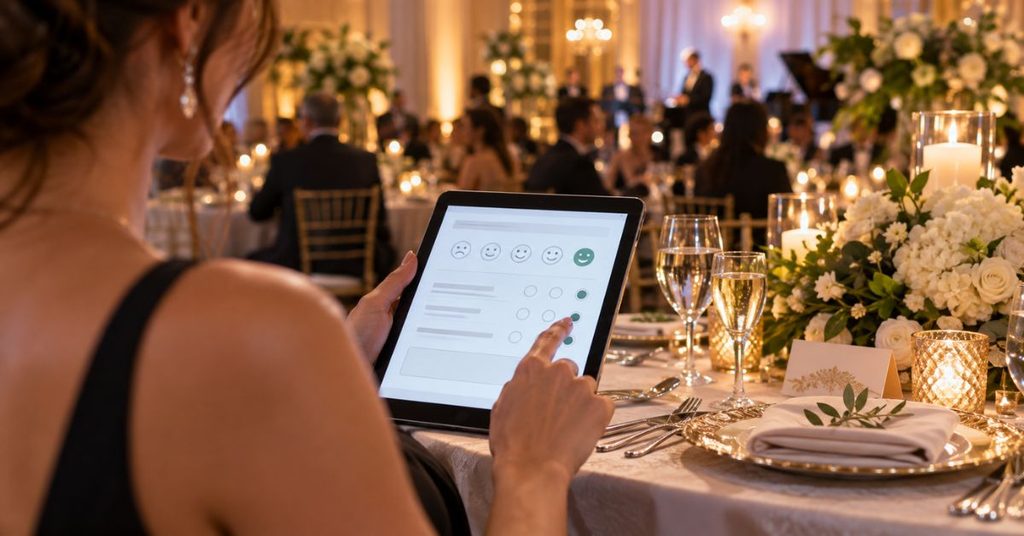
Find out whether the programme supported the meal
“How did the time available for eating feel?”
Offer “Much too short”, “Slightly too short”, “About right”, “Slightly too long” and “Much too long”. Include “I did not stay for the full meal”.
This helps distinguish a disappointing meal from one guests were too rushed to enjoy. If timing scores poorly, examine when speeches, presentations or activities interrupted service.
For events with several programme segments, add a selectable question: “Which part would you most like included again?” List only activities that happened, alongside “None” and “No preference”. Guests’ choices can help you protect a popular segment while making space elsewhere.
Close with a decision you can act on
“What one change would most improve your experience at a similar banquet?”
Leave this as a short, optional comment. Asking for one change encourages guests to identify their priority instead of producing an unfocused wish list.
Keep it distinct from the opening highlight. Together, the two answers show what deserves to stay and what needs attention. A guest can love the meal while still wanting clearer directions to the venue; both observations belong in the planning brief.
Turn responses into your next banquet brief
Group answers under menu favourites, food availability, dietary suitability, room comfort and programme timing. Look for repeated details, but investigate a serious individual concern even when nobody else mentions it.
Record how many guests answered each question. Ten positive responses from a large guest list should not become “everyone loved it”. Exclude “Not applicable” answers from ratings, and remember that respondents may have different experiences from guests who stayed silent.
Then create three actions: retain a proven favourite, fix a recurring obstacle and test one improvement. When discussing your next banquet venue in Singapore, share these specifics with the organiser. “Keep the meal break uninterrupted” is a clearer request than “make the evening more enjoyable”.
Frequently asked questions
When should I send a post-banquet survey?
A practical starting point is the following day, while details are still recent. Send one polite reminder a few days later if needed, and give guests a clear closing date.
How many questions should it contain?
Aim for six to eight core questions, with follow-ups shown only when relevant. Test the survey on a phone and state a completion time based on an actual trial.
Should responses be anonymous?
Allow feedback without a name where possible. Only describe the survey as anonymous if its settings support that promise. Provide a separate, optional way to request a personal response.
Should I ask guests to rate value for money?
Only if they paid and knew the price. Invited guests can judge their experience, but usually cannot assess the organiser’s spending. Ask them what they would choose again instead.
Can I reuse the same survey for future events?
Keep core wording and scales consistent for similar banquets, then update dish names and programme options. Consider differences in the guest mix and event format before interpreting changed scores.