Ambience and design shape how guests experience an event: whether they feel welcome, start conversations easily and stay engaged with the programme. A beautifully decorated room loses its appeal when people struggle to hear a speech or squeeze between tables. The most effective design brings atmosphere and practical use together.
For events in Singapore, that means considering the occasion, guest mix and comfort alongside the visual theme. Every choice should support what you want people to feel and do, from their first impression to the final conversation.
Set the Emotional Tone Before Guests Take Their Seats
The entrance gives guests their first clue about the occasion. A softly lit welcome area with personal photographs can suit an anniversary dinner. A clear registration point and restrained event signage can introduce a focused business gathering.
Decide on the intended mood before choosing decorations. An awards evening might call for anticipation and ceremony; a team gathering may need a more relaxed atmosphere that invites conversation. Use that intention to guide the welcome display, furniture and background music.
Give guests an obvious next step when they enter. Position the welcome sign where it is visible before the queue, and leave room for people to pause without obstructing the doorway. A straightforward arrival helps the event feel well organised immediately.
Choose a Room Whose Scale Supports the Occasion
Room size affects the sense of intimacy and energy. Widely scattered tables can make a smaller gathering feel disconnected, while an overcrowded layout leaves little room for spontaneous interaction.
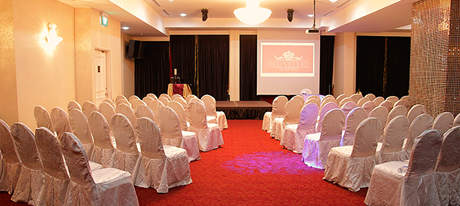
The Landmark’s event venues in Singapore illustrate why the intended setup matters. Its venue table lists seated capacities of 100 for Sapphire, 150 for Red Velvet and 250 for The Landmark Ballroom. Theatre and standing capacities differ, so confirm the arrangement that fits your programme before finalising the guest list.
Assess the room with your stage, dining arrangement and decorative features in mind. Ask for a proposed floor plan that shows the complete setup. The right scale brings guests close enough to share the occasion while allowing them to move comfortably.
Use Lighting to Guide Attention
Lighting determines what guests notice and how clearly they can see it. Plan general room lighting for comfortable movement, focused light for activities, and decorative lighting around selected features.
For dinner, consider softer lighting around tables while keeping menus and food clearly visible. During speeches, illuminate the speaker’s face. For presentations, check that light falling on the screen does not wash out the image, while retaining enough light for note-taking and movement.
Test the actual settings before the event. Sit at the back, read a menu and check the stage through a camera. Strongly coloured light may look striking on a wall but distort faces and food. Agree on lighting changes in the running order so the atmosphere follows the programme naturally.
Design for Conversation and Participation
Furniture placement influences who speaks to whom. Round tables support discussion within a group; theatre seating directs attention towards a speaker. For networking, provide small gathering points and enough open space for guests to join or leave conversations comfortably.
The Landmark’s guide to how seating layout affects guest experience offers further guidance on matching arrangements to the occasion.
Sound deserves equal attention. During conversation, keep background music low enough that guests do not need to raise their voices. For speeches, prioritise clear microphone coverage across the room. Test from the seats nearest the speakers and the furthest corners. Where possible, position a quieter conversation area away from entertainment so guests have a choice of environments.
Build a Visual Identity That Belongs to the Event
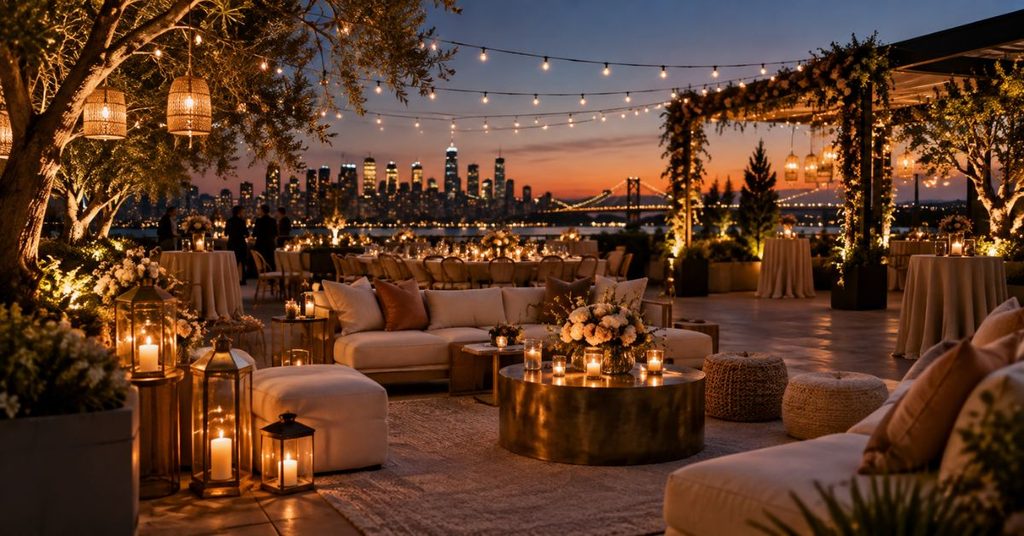
A coherent visual theme makes the occasion recognisable. Carry a small selection of colours and materials through the entrance, table settings and main backdrop. Work with the room’s existing finishes so that hired decorations feel intentional.
Choose one main focal point for each important moment. At a wedding, this might be the ceremonial setting; at a launch, the product display. Keep surrounding details quieter so guests can immediately recognise where to look.
Personal meaning matters, too. For celebrations involving different traditions, discuss significant colours, symbols and ceremonial needs with the hosts. The Landmark’s wedding event offering includes Malay, Indian, Middle Eastern and multicultural celebrations. Let the couple’s preferences guide the design without making assumptions based on their background.
Make Comfort Part of the Atmosphere
For a Singapore event, plan cooling and a sheltered arrival route, and agree on an indoor alternative for any outdoor element. Check comfort in the occupied room during the event, since an empty venue walkthrough cannot reproduce the conditions of a full gathering.
Include different guest needs in the design brief. Provide stable seating, readable signs and clear routes to dining areas and toilets. Ask about accessibility requirements early, then confirm how the proposed furniture arrangement will accommodate them.
Table styling needs the same care. Keep centrepieces below seated sightlines or raise them sufficiently above eye level, and check the view from each seat. Avoid strong fragrances near dining tables. Guests should be able to enjoy the setting without continually adjusting themselves around it.
Spend on Details That Guests Will Experience
When the budget is limited, prioritise the room setup, usable lighting and clear sound before adding decorative layers. Concentrate remaining spending on a focal feature that guests will see during an important moment.
Ask what furniture and equipment the venue provides, then identify genuine gaps. Reusable signs and adaptable arrangements can also reduce the need to purchase everything again for a future event.
Before approving the design, walk through arrival, seating, dining and departure with the venue team. Check where queues may form and whether staff can serve without interrupting the programme. The Landmark’s event space planning guide can help you review these practical details.
FAQs
When should ambience and design planning begin?
Begin when defining the programme and shortlisting venues. Early planning helps you choose a room whose size, finishes and facilities support the atmosphere you want.
Can one room suit both formal and relaxed activities?
Yes, if the layout and available controls allow it. Agree in advance how lighting, music and furniture will change, including the time and staff needed.
Is a detailed theme necessary for a successful event?
No. A consistent palette, suitable furniture and a clear focal point can create a complete setting. Add themed details when they have meaning for the occasion.
Who should coordinate design changes during the event?
Appoint one organiser to coordinate with the venue and suppliers. Give them the running order, including lighting cues, music changes and any room adjustments.
How can organisers judge whether the design worked?
Observe how guests use the room and ask specific feedback questions about comfort, conversation and visibility. Record practical improvements while the event is still fresh.