
A venue coordinator usually manages the venue’s agreed services, while a wedding planner manages the wider celebration within the scope you hire them for. The difference becomes clear when something changes: the venue team can adjust meal service, but someone else may need to update your photographer, brief your emcee and reorganise your entrance.
For couples in Singapore, where a wedding may include home ceremonies, solemnisation and a reception, understanding that boundary helps you choose the right support. Start with the responsibilities you need covered, then check who has actually agreed to handle them.
What Your Venue Coordinator Usually Handles
Your venue coordinator is your contact for arrangements tied to the property and your wedding package. Before the celebration, this typically means discussing the room layout, menu, guest numbers, access times and included facilities.
They communicate your confirmed requirements to the venue’s operations team. Depending on the package, that might cover furniture placement, meal timing, dietary requests and the use of in-house sound equipment.
On the day, venue staff deliver those arrangements. However, the person who handled your booking may hand it over to a banquet or operations manager. Ask who will be present and how your final instructions will reach them.
The boundary matters: allowing a florist into the room does not necessarily mean checking every arrangement against your design brief. Similarly, providing microphones does not automatically include someone to cue every speech and song.
What a Wedding Planner Adds
A full-service wedding planner connects decisions across your wedding. Their agreed work may include shaping the budget, sourcing suppliers, comparing proposals, tracking deadlines and developing a programme that fits your priorities.
They consider how individual bookings affect one another. A longer photography session, for example, changes transport arrangements, preparation time and when you can realistically arrive for the reception.
Where wedding-day management is included, the planner coordinates the people delivering that programme. They can brief suppliers, monitor timings and resolve issues across different parts of the celebration.
Still, “full service” needs a written definition. Styling, invitation management, guest transport, rehearsals and packing up may be separate services. A planner can coordinate a decorator without personally installing the decorations. Confirm both the management responsibilities and the practical work included.
Who Handles the Tasks That Overlap?
These are typical divisions, subject to each provider’s agreed scope:
| Task | Venue coordinator | Wedding planner |
| Budget | Explains venue charges and package options | Tracks the wider wedding budget |
| Suppliers | Communicates access rules and venue requirements | Coordinates external suppliers and their schedules |
| Seating | Confirms a workable room layout | Helps translate the approved guest list into seating arrangements |
| Programme | Aligns venue service with agreed timings | Builds and coordinates the overall wedding schedule |
| Décor | Arranges items included in the venue package | Coordinates separately commissioned styling, if included |
The couple still needs to make personal decisions, such as whom to invite and which relatives should sit together. Your team needs those answers before it can implement the plan.
How the Roles Work Together at a Singapore Wedding
Consider a celebration with a morning tea ceremony at home, photographs and an evening reception. The venue team can prepare the reception space, but it is unlikely to oversee departures from home or keep the earlier photography session on schedule unless specifically engaged to do so.
A planner covering the whole day can build travel buffers and coordinate those transitions. If the couple runs late, the planner updates the venue contact, who checks what changes are possible with the kitchen and service team.
For a wedding involving a nikah ceremony, outfit changes or cultural performances, discuss the sequence with your families and relevant ceremony participants. A planner can organise the logistics; the venue team confirms what the space and service schedule can accommodate. Neither should be expected to guess your family’s customs.
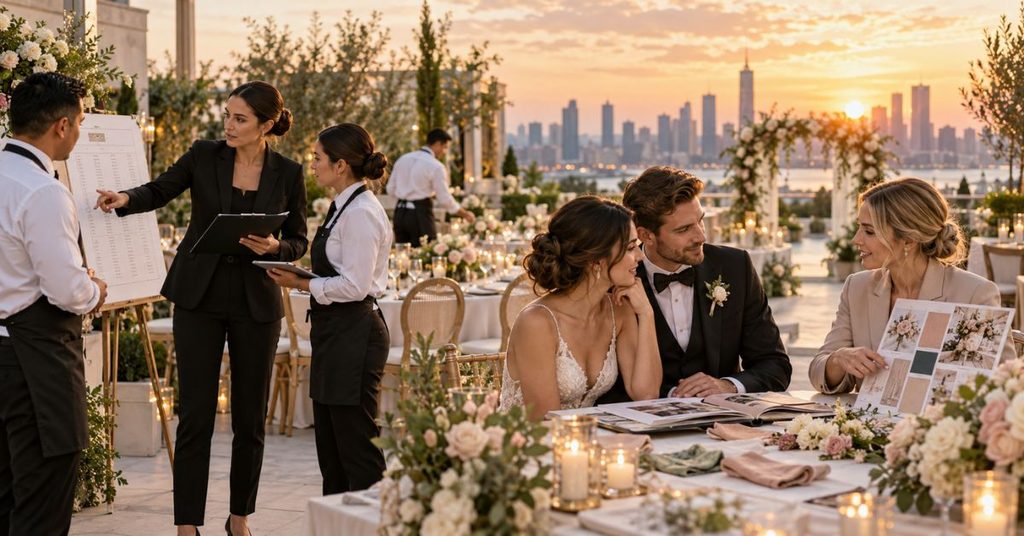
When Venue Support May Be Enough
A venue coordinator may provide enough professional support when your celebration takes place in one location, the package covers most arrangements and you are comfortable organising the remaining details.
You will still need someone to own tasks outside the package. For a straightforward reception, a willing, well-briefed friend might handle supplier calls or gather relatives for photographs. Be realistic about whether that person can also enjoy the wedding.
The Landmark’s wedding venue in Singapore welcomes Malay, Indian, Middle Eastern and multicultural celebrations and describes support from dedicated wedding specialists. Ask the team to explain the coordination included in your selected package before deciding whether to engage additional help.
When to Choose a Planner or Actual-Day Coordinator
A planner is worth considering when you need help making and managing decisions over several months. Multiple locations, numerous external suppliers, limited planning time or organising from overseas can make that support particularly useful.
If you have already chosen your suppliers and planned the celebration, actual-day coordination may be a better fit. This usually focuses on reviewing your arrangements, confirming logistics and running the agreed programme. It is a separate role from the venue’s own coordinator.
Despite the name, an actual-day coordinator needs preparation time. Ask when the handover begins and what information they require. Giving someone a contact list on the wedding morning leaves little opportunity to spot conflicting timings or missing arrangements.
Questions to Settle Before You Book
Ask both providers these questions and keep the answers with your booking documents:
- Who will attend on the day, and what hours will they cover?
- Who briefs external suppliers and follows up if someone is late?
- Who cues entrances, speeches, music and ceremony transitions?
- Who sets out and collects personal decorations, gifts and belongings?
- What happens if the schedule overruns or the assigned coordinator is unavailable?
Once responsibilities are agreed, share one final programme with named contacts and clear deadlines. Decide who can approve extra spending so a last-minute request does not become an unexpected bill.
Frequently Asked Questions
1. Is a venue coordinator included in every wedding package?
No. Some packages include a dedicated contact; others provide more limited support. Confirm the tasks covered and whether that person will attend your wedding.
2. Can I bring my own wedding planner?
Ask the venue before booking. Confirm access arrangements, supplier requirements and how your planner will communicate with the venue’s operations team.
3. Will a wedding planner handle supplier payments?
They may track deadlines or arrange payments if agreed. Clarify who signs contracts, authorises expenditure and transfers money. Do not assume the planner pays suppliers for you.
4. Who looks after gifts and ang bao?
Assign a trusted person and agree to a secure handover process. Neither the venue coordinator nor planner should be assumed responsible without an explicit arrangement.