Choosing a wedding reception venue affects almost every other decision you will make, from the number of guved, where your photographer can work, how smoothly elderly relatives arrive, and whether the programme stays on schedule.
The challenge is that a venue can look impressive during a viewing but still create practical problems on the wedding day. A ballroom may technically accommodate your guest count but leave little room for a stage or reception area. An attractive package may become significantly more expensive once additional charges are included. A convenient location for the couple may be difficult for a large part of the guest list.
For couples planning a reception in Singapore the best approach is therefore to evaluate the venue as an entire guest experience rather than choosing it on appearance alone. Here are the considerations that deserve the most attention.
Start With Your Realistic Guest Count
Guest count should come before décor, themes or table styling because it determines which venues are genuinely suitable.
Maximum Capacity Is Not the Same as Comfortable Capacity
When a venue states that it can accommodate a certain number of guests, find out what that capacity assumes. Does it include round banquet tables? Is there still enough space for a stage, aisle, buffet stations, registration table and photo area?
This matters particularly when comparing rooms of different sizes. The Landmark, for example, lists seated capacities of approximately 100 for Sapphire, 150 for Red Velvet and 250 for The Landmark Ballroom. Couples can review the different event venue spaces before deciding which layout best matches their reception.
Instead of asking only, “Can this room hold 200 people?” ask “What does this room look and feel like with 200 people plus our stage, tables and other planned features?”
You should also leave some flexibility between your expected and maximum attendance. A venue that only works if every seat is filled perfectly can make late guest-list changes unnecessarily difficult.
Think About How Guests Will Move Through the Reception
A good wedding reception has a natural flow. Guests should know where to register, where to wait, how to reach their tables and where important activities are taking place without creating bottlenecks.
Map Out the Reception Before Booking
Imagine the event from arrival to departure. Where will guests gather before the ballroom opens? Is there enough space around the entrance if several families arrive together? Can people reach the buffet without passing directly in front of the stage?
Consider where you will need space for:
- Guest registration or reception
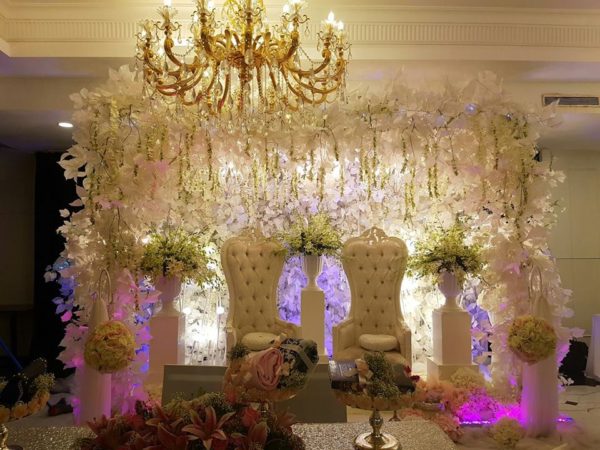
- A wedding stage or pelamin
- Buffet or food stations
- Photography and family portraits
- Cake cutting or ceremonial activities
- Entertainment, performances or speeches
- Gifts and personal belongings
The important question is not simply whether these features fit individually. They need to work together without making the room feel crowded.
If possible, ask the venue to show you previous layouts for receptions with a similar number of guests.
Choose a Location That Works for Your Guests
Wedding venues are often selected according to the couple’s preferences, but accessibility becomes much more important when hundreds of people may be travelling from different parts of Singapore.
A convenient location can improve attendance, reduce late arrivals and make the experience easier for elderly guests, families with young children and people who do not drive.
Check the Entire Arrival Experience
Look beyond the address itself. Consider nearby public transport, parking, sheltered drop-off areas and the distance guests must walk after arriving.
For example, The Landmark is located at Village Hotel Bugis, 390 Victoria Street. A central location can be particularly useful when the guest list includes people travelling from different parts of Singapore.
During your site visit, try arriving exactly as a guest would. It can reveal practical issues that are easy to overlook when you already know where the venue is.
Give Catering as Much Attention as the Room
Guests may admire the decorations when they arrive, but food is one of the parts of a reception they are most likely to remember.
Do not evaluate catering purely by the number of dishes offered. Consider whether the menu is appropriate for your guests, whether food can be replenished efficiently and how service will operate during the programme.
Consider Religious and Dietary Requirements Early
Singapore weddings frequently bring together guests from different backgrounds, so dietary requirements should be addressed before the venue is confirmed.
For Muslim weddings or multicultural receptions with Muslim guests, halal dining can simplify planning considerably. MUIS is the authority responsible for halal certification in Singapore.
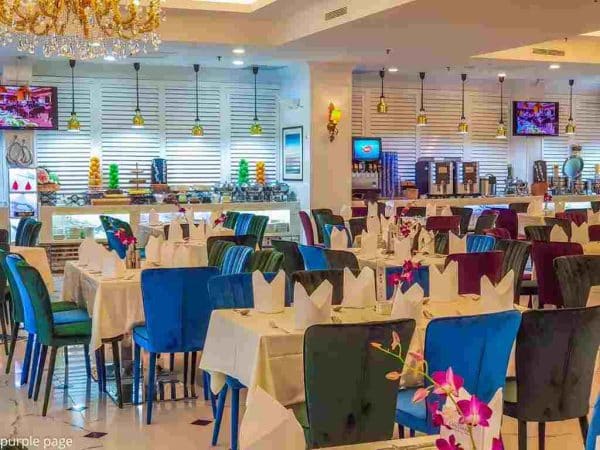
The Landmark presents halal dining as a core part of its offering and provides International, Local, Western, seafood and Indian selections through its halal buffet menu.
Beyond halal requirements, ask how the venue handles vegetarian meals, allergies, children’s meals and other dietary requests.
Also arrange a tasting whenever possible. A menu description cannot tell you everything about portion sizes, flavour, presentation or how well dishes will work when served to a large crowd.
Compare the Final Cost, Not Just the Per-Person Price
Wedding packages can be difficult to compare because two venues with similar headline prices may include very different things.
This is especially important in Singapore when quotations use different pricing formats. Landmark’s current wedding page, for example, displays both nett prices and rates marked “++”. Singapore’s prevailing GST rate is currently 9%, so couples should confirm exactly which taxes and venue charges are already included in every quotation.
Ask for a Detailed Written Quotation
Before paying a deposit, clarify:
- Whether the quoted price is nett or subject to additional charges
- Minimum guest count or minimum spending requirements
- Charges for additional guests
- Venue rental and overtime fees
- AV equipment and technical support
- Decorations, furniture and table settings
- Corkage or external catering restrictions, where applicable
- Setup, teardown and cleaning costs
- Deposit amounts, payment dates and cancellation conditions
This gives you a much more useful comparison than simply placing two per-person rates next to each other.
A slightly more expensive package can represent better value if it already includes services that would otherwise need to be hired separately.
Check Exactly What the Venue Provides
Never assume that something visible during a site visit automatically comes with your wedding package.
The stage, lighting, chairs, table linen or decorative elements you see may belong to another couple, an external decorator or a different package tier.
Ask the venue to separate what is included from what is available at additional cost.
Pay Particular Attention to Technical Requirements
If your reception includes speeches, videos, music or performances, check the audio-visual setup before signing the contract.
Find out whether the venue provides microphones, speakers, projectors or screens and whether technical assistance is available during the event.
For entertainment-heavy weddings, also ask about power requirements, sound restrictions and where performers can prepare. Resolving these questions early prevents your entertainment vendor from discovering limitations during setup.
Understand the Rules for External Vendors
Couples often build their wedding around several suppliers: photographers, videographers, decorators, performers, florists, stylists and wedding planners.
Before confirming the venue, determine how much freedom those suppliers will have.
Ask about access times, loading areas, decoration restrictions and deadlines for clearing equipment after the reception. A decorator who needs four hours to create your stage cannot do much if the venue only permits access one hour before guests arrive.
If the venue has preferred suppliers, find out whether using them is optional or mandatory and whether there are additional charges for bringing in your own vendors.
Make Sure the Venue Supports Your Wedding Traditions
Not every wedding follows the same programme. Malay, Indian, Middle Eastern and multicultural receptions can involve different ceremonial activities, food-service styles, family arrangements and entertainment requirements.
The venue should be capable of adapting to the programme rather than forcing the programme to fit a standard banquet format.
The Landmark specifically hosts Malay, Indian, Middle Eastern and multicultural weddings and offers wedding and solemnisation arrangements for different event formats.
Discuss traditions with the venue coordinator in practical terms. Explain what will happen, how many people are involved, what equipment is required and how much time each element takes. Specific information is much more useful than simply asking whether the venue has hosted a similar wedding before.
Consider Comfort and Singapore’s Weather
Weather matters even when your reception is mainly indoors.
Guests may still need to walk between a car park, public transport stop, hotel entrance or outdoor reception area. Rain can also affect photography plans, outdoor decorations and arrival times.
If any meaningful part of the wedding depends on an outdoor area, there should be a realistic wet-weather alternative not simply a backup space that technically exists but cannot comfortably accommodate everyone.
Indoors, look at air-conditioning, ventilation and room temperature when the venue is full. A room that feels comfortable during an empty afternoon viewing may feel different after hundreds of guests, lighting equipment and food stations are added.
Look at the Quality of Venue Coordination
Facilities matter, but the people operating them can have just as much influence on how smoothly the reception runs.
During your discussions, notice how clearly the venue coordinator answers detailed questions. Do they understand your programme? Are costs explained transparently? Can they anticipate practical concerns rather than simply agreeing to every request?
Ask who will be responsible for your wedding on the actual day and whether that person will coordinate directly with your planner, caterer, decorator and entertainment providers.
Clear responsibility is important. When something changes ten minutes before dinner begins, your vendors need to know exactly who has authority to make decisions.
Conduct a Proper Site Visit Before Committing
Online photographs help create a shortlist, but the final decision should be made after seeing the venue in person.
Where possible, visit at approximately the same time of day as your planned reception. This helps you assess traffic, natural light, parking, guest arrival conditions and the atmosphere of the venue more realistically.
Use the Visit to Test the Guest Experience
Walk through these practical questions during your viewing:
- Is the entrance easy for a first-time guest to find?
- Are lifts and other access routes convenient for elderly guests?
- How far are the restrooms from the reception area?
- Where will guests wait if they arrive early?
- Are there distracting pillars or blocked sightlines?
- Where will the couple and wedding party prepare?
- Is the stage clearly visible from the outer tables?
- How will guests move between dining, photography and ceremonial areas?
Take photographs and measurements where permitted. After several venue visits, details can easily blend together and having your own records makes comparison much easier.
Conclusion
Planning a wedding reception venue is ultimately about finding the right combination of capacity, layout, location, food, cost, flexibility and operational support.
Start with your guest count and programme rather than the venue’s appearance. Then test how comfortably the space accommodates the reception you actually want to hold. Confirm catering requirements, understand the complete cost, check supplier restrictions and walk through the experience from a guest’s point of view.
A strong venue should not simply provide a beautiful room. It should remove logistical problems and give the couple, families, vendors and guests an environment in which the celebration can unfold naturally.
Frequently Asked Questions
How far in advance should I book a wedding reception venue in Singapore?
Popular dates can be booked well ahead, especially weekends and culturally significant wedding periods. Begin shortlisting venues once you have an approximate guest count and preferred date, then confirm availability before committing to other major vendors.
What should I ask a wedding venue before paying the deposit?
Confirm capacity, final pricing, minimum guest requirements, package inclusions, cancellation terms, vendor restrictions, setup times, catering arrangements and any overtime charges. Make sure important commitments are included in the written agreement.
How do I know whether a wedding venue is large enough?
Do not rely only on the published maximum capacity. Ask to see a floor plan showing your estimated number of guests together with the stage, aisles, buffet stations, registration area and any entertainment or photography spaces you require.
Is a halal wedding venue useful for a multicultural reception?
Yes. If Muslim guests will attend, using a venue with appropriate halal dining arrangements can make menu planning simpler while still allowing the couple to provide food that suits a diverse guest list.